What If Learning Strengthened the Brain’s Bridge?
February 9, 2026 2026-08-20 8:08What If Learning Strengthened the Brain’s Bridge?
What If Learning Strengthened the Brain’s Bridge?
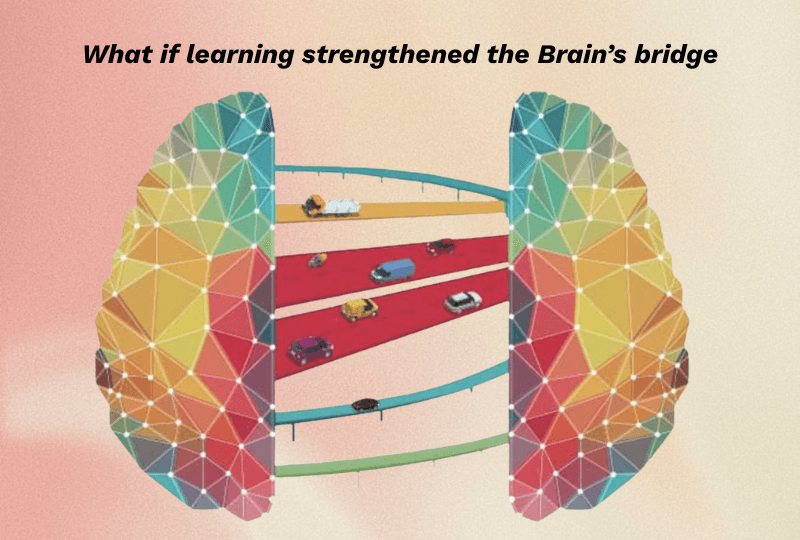
One brain, two halves—each with its own specialised role.
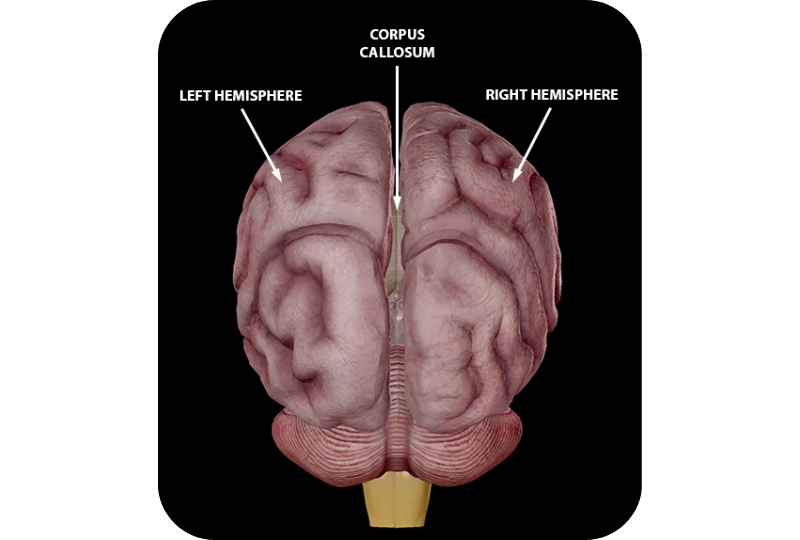
The left and right hemispheres of our brain are connected by a bridge called the corpus callosum. This powerful connection—made up of nearly 200–250 million nerve fibres—acts like a superhighway, allowing the two halves of the brain to communicate and share information seamlessly with each other.
Studying how this communication happens, and understanding the distinct roles of each hemisphere, is known as split brain research.
In the 1960s, Nobel Prize winners, Roger Sperry and Michael Gazzaniga did groundbreaking research on patients with epilepsy. Epilepsy is a condition where a person has repeated seizures, which are a result of uncontrolled communication within the brain. Normally, our brain has built-in “check-points” that act like brakes and accelerators which allow for the smooth and balanced communication within the brain via neurons. When this balance is disturbed, it can lead to a seizure.
Epilepsy was treated via a surgical procedure of damaging the two way communication street between the hemispheres – the corpus callosum. By doing this, doctors aimed to stop seizures from spreading from one side of the brain to the other. Scientists Sperry and Gazzaniga studied people who had undergone this surgery. What they found out was not only interesting but gave important insights and paved the way for the future of Brain Science research.
“When communication between the hemispheres is lost, each is unaware of the other’s knowledge and each functions independently based on the information it receives.”
-Michael Gazzaniga
In one of their classic experiments patients were shown everyday objects and asked to name them. When the object appeared on the right side of their vision, they could name it easily. But when the same object appeared on the left side of their vision, they couldn’t name the object but identify it from the lot. (Refer to Fig. 1)
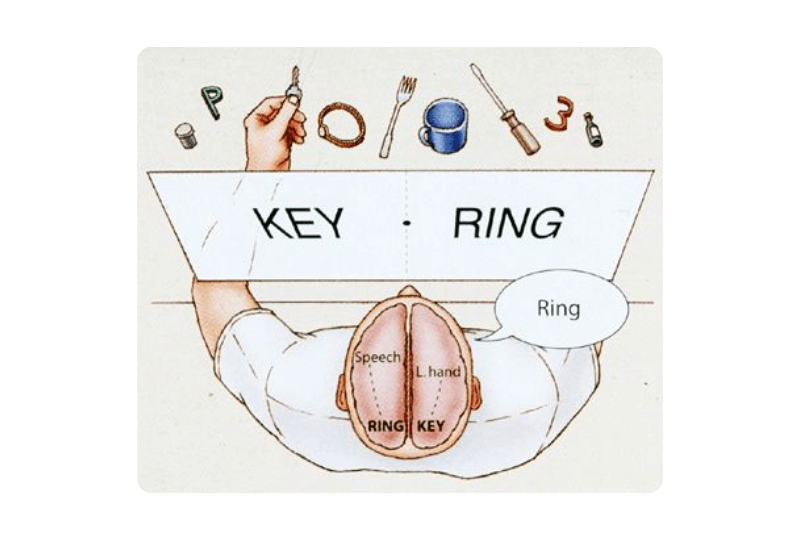
Fig: In split-brain patients, the brain can recognise what it sees, but without communication between its two halves, it may not be able to say it.
This was very intriguing and further research revealed that each half of the brain mainly processes information from the opposite side of the body. The left side of the brain is responsible for language and speech and skills like understanding space or some emotions lean more on the right half of the brain. Both the two halves carry out their own tasks but need to be in constant communication with each other for normal functioning. Hence, when the object appeared on the left side of the patient’s vision, it could not be named as this information never reached the left hemisphere! The information was processed only by the right half of the brain- lacking the language and speech centre.
This experiment provided an early entry into understanding that our two hemispheres need to communicate with each other in order to help us make a meaning of our world. It also has important implications for early childhood development. The development of the corpus callosum is at its peak between ages 3-6 and again during early adolescence. It becomes important to include certain activities in children’s daily life which helps strengthen this constant exchange of communication between their two developing hemispheres.
Neurophysiologist, Dr. Carla Hannaford also explains
“The corpus callosum is our brain’s primary integration zone. When children have insufficient development or use of this critical structure, we see a cascade of effects on learning and coordination.”
At The Navriti School, children are introduced to particular activities which help accelerate brain activity. One such example is the use of interhemispheric toys in our classrooms. As the name suggests, these toys engage both the left and right sides of the brain through guided hand tracing – enhancing focus, memory, and problem-solving abilities. It also helps toddlers strengthen their grip and finger control. Inspired by Montessori philosophy, these activities emphasise hands-on, self-directed learning – helping children develop an integrated, balanced, and resilient brain.
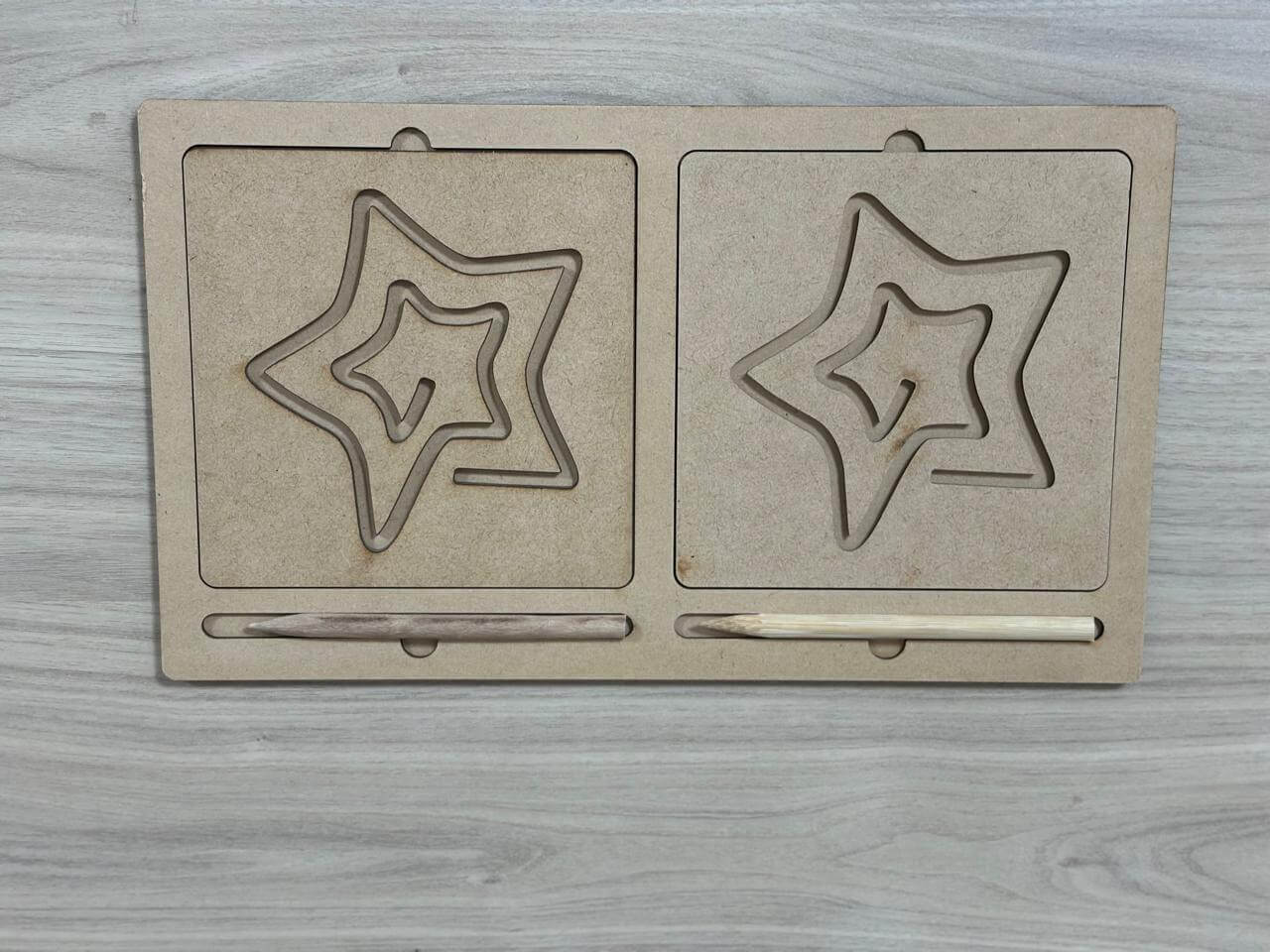
Fig: : Interhemispheric Toys : Children can trace the stencil with both their hands – engaging both hemispheres at the same time.
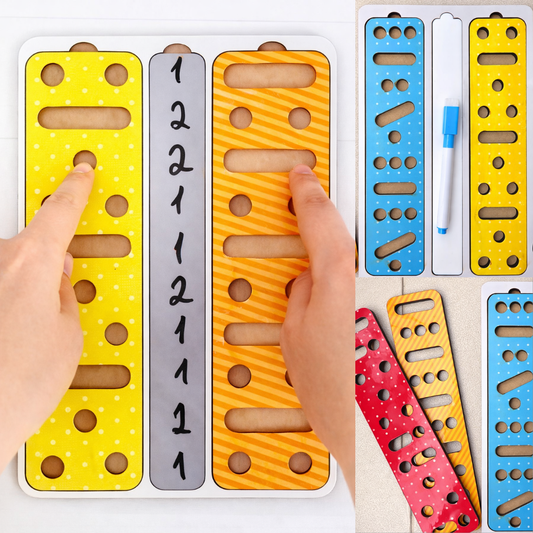
Fig : NeuroBoards : A playful tool that engages both hemispheres of the brain while enhancing attention and hand–eye coordination.
__________________________________________________________________
Written by Kangna Verma, Admission & Communication Specialist, The Navriti School
Further Reading