The Parent’s Guide to How Young Children Actually Learn: What Research Says (and What Schools Often Miss)
October 29, 2026 2026-10-29 8:23The Parent’s Guide to How Young Children Actually Learn: What Research Says (and What Schools Often Miss)
The Parent’s Guide to How Young Children Actually Learn: What Research Says (and What Schools Often Miss)
Young children learn best through active engagement, play, and real-world experiences, contrary to common misconceptions that favor early formal instruction. Brain science consistently shows that curiosity-led, hands-on discovery, supported by nurturing relationships, builds robust cognitive, emotional, and social foundations far more effectively than rote memorization or structured academic drills at a very young age. This guide explores what research truly reveals about how children learn in their early years and why many traditional school settings often miss these crucial insights.
Key Takeaways
- Young children are natural scientists, learning through active exploration and play.
- Brain science emphasizes experiences over early academics for healthy development.
- Many schools overlook research, pushing formal learning too soon.
- Play-based learning fosters holistic child development and future-ready skills.
- Limited, monitored screen time is crucial for young children’s well-being.
- Formal academics like reading and math are best introduced when children are developmentally ready, typically around ages 6-7.
- Parents can support learning at home by fostering curiosity, not through pressure.
- Nurturing, emotionally safe environments are vital for confidence-building education.
- Active parental involvement matters, but over-scheduling or academic pressure can hinder natural learning.
- Choosing a preschool aligned with learning science prioritizes experiential, child-led approaches.
How Do Young Children Learn Best According to Research?
Young children learn best through experiential learning,by actively exploring, experimenting, and interacting with their environment, rather than through passive instruction. Research shows their brains are wired for discovery, making hands-on activities, play, and social interactions the most powerful avenues for learning complex concepts and developing essential skills. When children can touch, taste, move, and create, they build deeper understandings that last.
- Learning through Discovery: Children naturally gravitate towards exploration. Think of a toddler dropping a spoon repeatedly from their high chair; they are conducting a physics experiment. This innate curiosity is a powerful driver for understanding the world.
- Active Engagement: Passive listening or watching from a young age is far less effective than doing. Children learn language by speaking it, problem-solving by facing small challenges, and social skills by interacting with others.
- Sensory Input: Multi-sensory experiences, seeing, hearing, touching, smelling, tasting, help solidify new information in a young child’s developing brain.
- Meaningful Contexts: Learning is most effective when it’s relevant and connected to a child’s real-world experiences, not abstract concepts presented in isolation.
What Does Brain Science Say About Early Childhood Learning?
Brain science confirms that the early years are a period of incredible growth and plasticity, where experiences literally shape brain architecture. During this time, the brain thrives on rich, varied sensory input, social interaction, and emotional security, forming critical neural pathways that underpin future learning and well-being. Pushing rote learning too early can actually be counterproductive, potentially stifling a child’s natural curiosity and joy in learning.
- Synaptic Pruning: Early childhood is a time when the brain creates an abundance of neural connections, more than it will ever have again. Experiences determine which connections are strengthened and kept, and which are “pruned” away. This means rich, diverse experiences are paramount.
- Emotional Safety First: A child’s brain cannot learn effectively when it’s stressed or anxious. Creating emotionally safe learning environments is fundamental, allowing children to take risks, make mistakes, and build confidence without fear of judgment.
- Executive Function Development: Skills like attention, memory, and self-regulation, often called executive functions, develop rapidly in early childhood, largely through play, problem-solving, and managing emotions in social settings. These skills are far more predictive of future success than early academic prowess.
Why Do Schools Not Teach the Way Kids Actually Learn?
Many traditional schools, driven by curriculum mandates, standardized testing pressures, or outdated pedagogical beliefs, often miss how children actually learn by prioritizing early formal instruction over play-based learning and discovery. This misalignment can lead to environments where children feel pressured, disengaged, and where their natural desire to explore is inadvertently suppressed.
- Focus on Measurable Outcomes: It’s often easier to measure a child’s ability to recognize letters or count to 20 than it is to assess their problem-solving skills, creativity, or emotional resilience. This leads schools to emphasize what’s easily testable.
- Legacy Systems: Education systems are often slow to adapt to new scientific findings. What was considered effective decades ago, like rote memorization, can persist even when research proves otherwise.
- Parental Expectations: Sometimes, parents, too, are under the impression that earlier academics mean better outcomes, inadvertently pushing schools towards more structured, less play-oriented approaches. It’s important for parents to understand what future-ready schools in Gurgaon truly prioritize.
What Learning Methods Work for Toddlers and Preschoolers?
For toddlers and preschoolers, the most effective learning methods are those that are hands-on, play-driven, and embedded in meaningful interactions. This includes experiential learning through sensory exploration, imaginative play, storytelling, and practical life activities that engage their innate curiosity.
- Play as Pedagogy: From building blocks to dramatic play, children use play to understand concepts like cause and effect, social roles, language, and early math.
- Storytelling and Conversation: Engaging in rich conversations, reading aloud, and encouraging children to tell their own stories are powerful ways to build language, literacy, and critical thinking skills.
- Practical Life Skills: Activities like helping with chores, dressing themselves, or preparing snacks teach independence, fine motor skills, and a sense of responsibility.
- Art and Music: Creative expression through art and music supports emotional development, fine motor skills, and cognitive processing.
How Much Screen Time is Okay for Young Children’s Development?
For young children, minimal and highly regulated screen time is recommended, with global health organizations generally advising against any screen time for children under 18-24 months and limiting it to about one hour per day for preschoolers. Excessive screen time can interfere with crucial developmental activities like play, social interaction, and sleep, hindering holistic child development.
- Quality Over Quantity: If screens are used, content should be high-quality, educational, and co-viewed with a parent who can interact and explain.
- Impact on Development: Too much screen time can negatively affect language development, attention spans, social skills, and even physical activity.
- Role of Interaction: The American Academy of Pediatrics emphasizes that “children learn best from interacting with people, not screens.”
What’s the Difference Between Play-Based Learning and Traditional Instruction?
Play-based learning differs fundamentally from traditional instruction by centering a child’s natural curiosity and self-directed exploration as the primary mode of learning, whereas traditional instruction typically involves a teacher-led, structured curriculum with predefined academic outcomes. While both have their place, play-based approaches in early years foster deeper engagement and more meaningful development.
| Feature | Play-Based Learning | Traditional Instruction |
|---|---|---|
| Approach | Child-led, discovery-oriented, hands-on | Teacher-led, structured, often didactic |
| Focus | Holistic development, process, inquiry, social-emotional | Academic subjects, specific outcomes, memorization |
| Role of Teacher | Facilitator, observer, guide, co-player | Instructor, dispenser of information, assessor |
| Activities | Free play, imaginative scenarios, art, outdoor exploration | Worksheets, lectures, drills, explicit lessons |
| Learning Outcome | Intrinsic motivation, creativity, problem-solving | Knowledge acquisition, skill mastery (often rote) |
| Environment | Flexible, stimulating, open-ended | Structured, often classroom-bound, predictable |
Play-based learning in the early years builds a strong foundation for future-ready skills, nurturing young minds to be adaptable, creative problem-solvers. This is why parents should look beyond academics when considering Gurgaon school admissions 2026.
When Should Kids Start Formal Academics Like Reading and Math?
Research consistently suggests that children are typically developmentally ready for formal academics like reading and math around the ages of 6 or 7, coinciding with brain maturation that supports abstract reasoning and sustained attention. Introducing these concepts too early, especially through drills, can create stress and disinterest, potentially hindering a lifelong love of learning.
- Developmental Readiness: Before age 6, a child’s brain is primarily focused on developing gross and fine motor skills, language, and social-emotional intelligence. Pushing formal academics prematurely can divert energy from these crucial foundational stages.
- Global Perspectives: Many highly successful education systems globally, such as in Finland, do not begin formal schooling until age 7.
- Reading Fluency: A strong predictor of reading success is oral language development and phonological awareness, which are nurtured through conversations, storytelling, and rhyming games, not necessarily early phonics drills.
How Can Parents Support Learning at Home Without Pushing Too Hard?
Parents can effectively support their child’s learning at home by fostering a rich, stimulating, and emotionally supportive environment that prioritizes curiosity and exploration over academic pressure. Engaging in everyday conversations, reading together, playing games, and involving children in practical tasks are powerful ways to nurture young minds without pushing too hard.
- Follow Their Lead: Observe what genuinely interests your child and provide resources or opportunities to explore those interests further. This cultivates curiosity-led learning.
- Read Aloud Daily: This is one of the most impactful activities for literacy development, vocabulary growth, and bonding. Ask questions and discuss the stories.
- Engage in Conversation: Talk about everything, what you see, what you’re doing, their feelings, their ideas. Rich language exposure is key.
- Prioritize Play: Provide ample time and space for unstructured play, both indoors and outdoors.
- Involve Them in Daily Life: Simple tasks like cooking, gardening, or tidying up teach valuable life skills, math concepts (measuring), and responsibility.
- Limit External Stimuli: While enriching experiences are good, avoid over-scheduling. Children need downtime to process, imagine, and self-regulate.
What Are Common Mistakes Parents Make with Early Learning?
One of the most common mistakes parents make with early learning is to inadvertently equate early academic achievement with future success, leading to an overemphasis on formal instruction, worksheets, and structured lessons before a child is developmentally ready. This pressure can inadvertently stifle a child’s natural curiosity and joy in discovery.
- Too Much Pressure, Too Soon: Believing that “earlier is better” for reading, writing, or math can lead to unnecessary stress for children and parents.
- Over-reliance on Educational Apps/Games: While some apps can be supplemental, they cannot replace human interaction and real-world experiential learning.
- Lack of Unstructured Play: Filling every moment with planned activities leaves little room for children to develop creativity, problem-solving skills, and self-direction.
- Focusing Only on Academics: Neglecting social-emotional development, creativity, and physical play in favor of academic drills can lead to an imbalanced child. For more on this, consider asking 7 questions every Gurgaon parent should ask before choosing a school.
Is Montessori or Waldorf Better for How Kids Actually Learn?
Both Montessori and Waldorf educational philosophies are well-aligned with research on how young children actually learn, as they both prioritize hands-on experiential learning, child-led discovery, and holistic development over early formal academics. The “better” choice often depends on a family’s values and a child’s individual temperament, as their specific approaches differ.
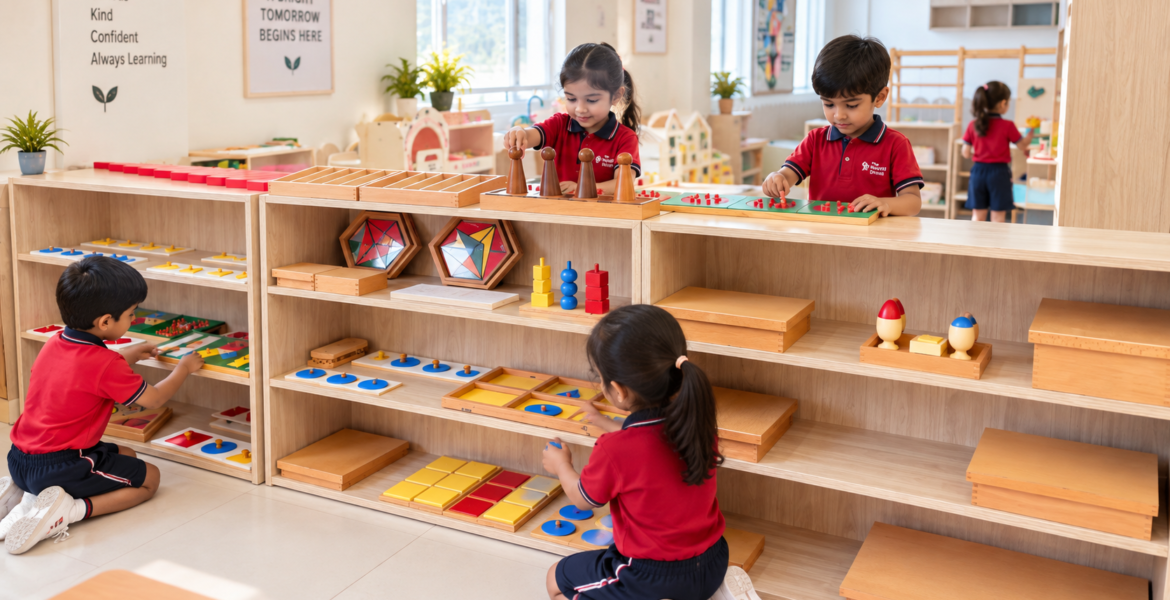
- Montessori: Emphasizes prepared environments, self-correction, practical life skills, and didactic materials that allow children to learn at their own pace, fostering independence and concentration. It’s often described as a science-informed teaching method.
- Waldorf: Focuses on imagination, creative play, storytelling, and artistic expression, with a strong emphasis on rhythm, routine, and connection to nature. Academics are introduced much later, usually around age 7, allowing for robust imaginative development.
Both approaches are a stark contrast to traditional methods that might neglect the intrinsic motivations of children.
What Should I Look for in a Preschool Based on Learning Science?
When choosing a preschool based on learning science, look for environments that prioritize play-based learning, foster an emotionally safe atmosphere, and emphasize hands-on exploration over early academic drills. A school that aligns with how children learn will also feature experienced, nurturing educators who act as facilitators of discovery.
- Ample Play Time: Ensure the schedule includes significant blocks of unstructured free play, both indoors and outdoors.
- Nurturing Educators: Teachers should be warm, responsive, and skilled at observing children’s interests to guide their learning, rather than just delivering information.
- Rich Environment: Look for a classroom filled with diverse materials that encourage exploration, creativity, and problem-solving, blocks, art supplies, dress-up clothes, natural materials.
- Focus on Social-Emotional Skills: Observe how the school handles conflicts, teaches empathy, and builds a sense of community. Emotional safety in schools is paramount.
- Outdoor Exploration: Access to natural environments for play and learning is crucial for physical and cognitive development.
- Respect for Individual Pacing: A good preschool understands that children develop at different rates and doesn’t push a standardized curriculum too rigidly. This approach to nurturing young minds is what truly makes the best primary schools in Gurgaon.
How Do You Know If Your Child Is Learning at the Right Pace?
Knowing if your child is learning at the right pace involves observing their engagement, curiosity, and overall well-being, rather than comparing them rigidly to developmental checklists or other children. A child who is curious, happy, exploring, and making progress in various developmental areas, cognitive, social, emotional, and physical, is very likely learning effectively.
- Look for Progress, Not Perfection: Each child has their own unique timeline. Focus on whether your child is gradually developing new skills and understanding, not on whether they’re meeting arbitrary milestones at an exact moment.
- Engagement and Joy: A key indicator of effective learning is a child’s intrinsic motivation and joy in exploration. If they are engaged and curious, they are learning.
- Holistic Development: Pay attention to social skills (sharing, empathy), emotional regulation (managing frustration), language development (communication), and physical abilities (running, drawing), not just early literacy or math.
- Trust Your Instincts: If you have genuine concerns about a consistent pattern of challenges, consult with early childhood experts or your pediatrician.
What Role Does Play Have in Child Development and Learning?
Play is not just fun; it is the primary engine of child development and learning, serving as the essential “work” of childhood. Through play-based learning, children develop critical cognitive, social, emotional, and physical skills, practice problem-solving, ignite their imagination, and build confidence in their abilities to interact with and understand the world around them.
- Cognitive Development: Play builds foundational skills in problem-solving, critical thinking, creativity, and language. Building a tower requires spatial reasoning; inventing a game requires rule-making.
- Social-Emotional Growth: Through play, children learn to share, negotiate, cooperate, empathize, and manage their emotions. These are vital for confidence-building education.
- Physical Development: Active play refines gross motor skills (running, jumping) and fine motor skills (manipulating small objects), which are crucial for later academic tasks like writing.
- Stress Reduction: Play provides an outlet for children to process experiences and reduce stress, fostering overall well-being.
How Much Parent Involvement Helps Versus Hurts a Child’s Learning?
Parent involvement significantly helps a child’s learning when it takes the form of supportive engagement, such as reading together, engaging in conversations, providing opportunities for play and exploration, and fostering an emotionally safe learning environment. However, involvement can hurt when it crosses into excessive pressure, over-scheduling, or micromanagement of academic outcomes, which can diminish a child’s intrinsic motivation and self-efficacy.
- Helpful Involvement: Being a warm, responsive presence; providing rich language environments; encouraging curiosity; and modeling a love of learning. This includes choosing a school that aligns with these principles, as discussed in Nursery Admissions Gurgaon 2026.
- Harmful Involvement: Pushing academics too early, over-scheduling with too many extracurriculars, consistently doing a child’s homework for them, or creating undue stress around performance. This can inadvertently communicate to a child that their inherent abilities are not enough.
- Finding the Balance: The goal is to be a supportive guide, not a demanding taskmaster. Encourage effort and resilience, celebrate small victories, and prioritize the child’s well-being over academic metrics.
Conclusion
Understanding how young children actually learn, through the lens of research and brain science, empowers us as parents and educators to create truly effective and joyful learning experiences. It reminds us that childhood is a time for exploration, play, and building relationships, not for rigid academic drills. By prioritizing curiosity-led learning, fostering confidence-building education, and creating emotionally safe learning environments, we can nurture young minds into curious, capable, and future-ready individuals who thrive not just in school, but in life. Let’s embrace science-informed teaching and ensure that our children’s early years are filled with the wonder and discovery they deserve, focusing on holistic child development that goes far beyond exams.