How to Shortlist the Right School in Gurgaon for Admissions 2026–27
February 3, 2026 2026-02-18 8:06How to Shortlist the Right School in Gurgaon for Admissions 2026–27

How to Shortlist the Right School in Gurgaon for Admissions 2026–27
Choosing the right school for your child is one of the most significant decisions you’ll make as a parent. With school admissions Gurgaon 2026 processes already underway, the pressure to find an institution that truly understands your child’s unique potential can feel overwhelming. Beyond the glossy brochures and impressive facilities lies a deeper question: which school will nurture your child’s natural curiosity while building the confidence and skills they need for an uncertain future?
The landscape of education in Gurgaon has evolved dramatically, with forward-thinking institutions embracing neuroscience-backed learning approaches that prioritise personalised education over one-size-fits-all methodologies. This shift represents more than just educational innovation—it reflects a fundamental understanding that every child’s brain develops differently, requiring thoughtful, evidence-based approaches to unlock their full potential.
Key Takeaways
• Look beyond academics to find schools that prioritise holistic child development, emotional well-being, and future- ready skills alongside traditional learning outcomes
• Evaluate teaching methodologies by seeking institutions that employ neuroscience-backed learning approaches and personalised education pathways tailored to individual children
• Assess the learning environment for child-centric education practices that foster curiosity, confidence, and discovery- led learning experiences
• Consider long-term impact by choosing schools that focus on building executive function skills, independent thinking, and adaptability for an ever-changing world
• Start early in the process as quality schools with innovative approaches often have limited seats and comprehensive admission procedures
Understanding the Modern Educational Landscape for School Admissions Gurgaon 2026
The educational ecosystem in Gurgaon has undergone a remarkable transformation, moving away from traditional rote learning towards more sophisticated, science-backed approaches to child development. This evolution reflects a growing understanding that the early years of a child’s education are critical for brain development and future success.
The Science Behind Early Learning
Recent advances in neuroscience have revealed fascinating insights about how children’s brains develop during their formative years. The period from nursery through Grade 5 represents a crucial window when neural pathways are most adaptable, making this the ideal time for personalised learning pathways that respond to each child’s unique cognitive profile.
Think of a child’s developing brain like a garden—with the right conditions, careful attention, and evidence-based nurturing, every seed of potential can flourish. Schools that understand this science create joyful learning environments where children don’t just memorise information but develop the cognitive flexibility to think critically and solve complex problems.
What Sets Progressive Schools Apart
Modern educational institutions in Gurgaon are distinguishing themselves through several key characteristics:
🧠 Neuroscience-Backed Approaches: Schools that integrate brain research into their teaching methodologies understand how memory formation, attention, and executive function develop in young children.
🎯 Personalised Education: Rather than treating all children identically, progressive schools assess individual learning styles, strengths, and areas for growth to create customised educational experiences.
🌱 Holistic Child Growth: The focus extends beyond academic achievement to include emotional intelligence, social skills, creativity, and physical development.
🔬 Discovery-Led Learning: Children learn best when they can explore, experiment, and discover concepts through hands-on experiences rather than passive absorption of information.
For parents navigating school admissions Gurgaon 2026, understanding these principles becomes essential for making informed decisions. The admission process at forward-thinking schools often reflects these values, looking beyond test scores to understand the whole child.
The Role of Founders and Leadership
The vision and expertise of a school’s leadership team significantly impact the quality of education delivered. Schools founded by scientists, educators, or child development experts often bring unique perspectives to the learning process. These founders typically understand the intricate relationship between cognitive science and practical education, creating institutions where science meets care.
When evaluating schools, consider the background and philosophy of the leadership team. Do they have expertise in child development? Have they designed curricula based on research rather than tradition? These questions can reveal whether a school truly understands how children learn best.
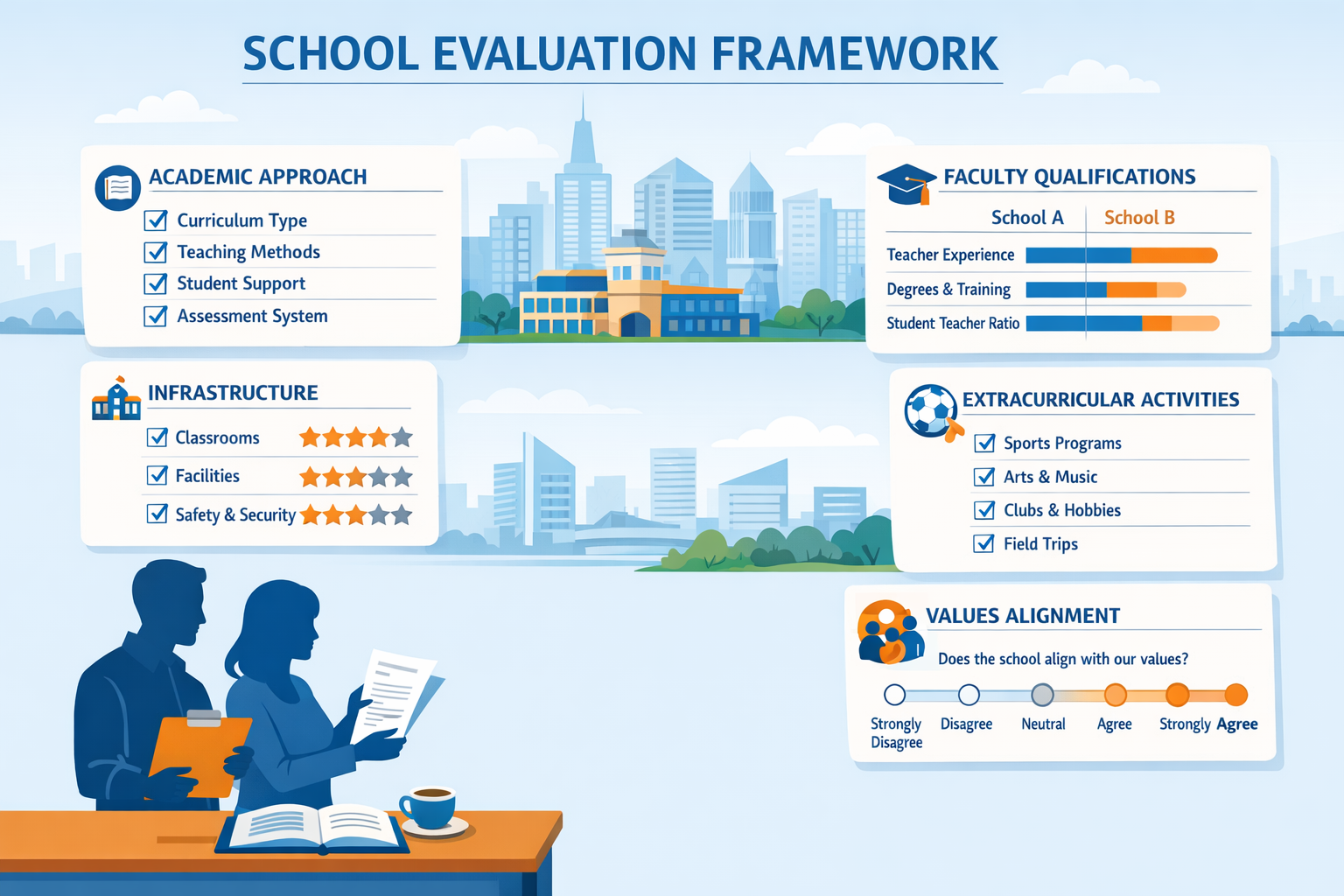
Essential Criteria for Evaluating Schools During Gurgaon School Admissions 2026
Selecting the right educational institution requires a systematic approach that goes far beyond surface-level impressions. The following framework will help you evaluate schools with the depth and precision your child’s future deserves.
Academic Philosophy and Teaching Methodology
The foundation of any excellent school lies in its educational philosophy. Look for institutions that can articulate not just what they teach, but why they teach it in specific ways.
Questions to Ask:
- How does the school personalise learning for different types of learners?
- What role does neuroscience research play in curriculum design?
- How are teachers trained to recognise and respond to individual learning needs?
- What evidence does the school provide about student outcomes beyond test scores?
Progressive schools often employ experiential learning approaches where children engage with concepts through multiple senses and real-world applications. For instance, instead of simply reading about plant growth, students might maintain a school garden, observe changes over time, and connect their observations to scientific principles.
Faculty Quality and Professional Development
The quality of teachers directly impacts your child’s educational experience. Exceptional schools invest heavily in recruiting educators who understand child development and provide ongoing professional development to keep them current with best practices.
Key Indicators:
- Teacher-to-student ratios that allow for individualised attention
- Ongoing training in child psychology and learning sciences
- Collaborative teaching approaches that bring multiple perspectives to learning
- Evidence of teacher retention and job satisfaction
Look for schools where staff are not just subject matter experts but also understand how to create emotionally safe environments where children feel confident to take intellectual risks and learn from mistakes.
Infrastructure That Supports Learning
While impressive facilities don’t guarantee quality education, the physical environment should support the school’s educational philosophy. Child-centric education requires spaces designed with young learners in mind.
Essential Features:
- 🏫 Flexible learning spaces that can be reconfigured for different activities
- 🔬 Science labs equipped for hands-on experimentation
- 📚 Libraries that encourage exploration and discovery
- 🎨 Creative spaces for artistic expression and maker activities
- 🌳 Outdoor areas for physical activity and nature-based learning
- 💻 Technology integration that enhances rather than replaces human interaction
Assessment and Progress Monitoring
Traditional schools often rely heavily on standardised testing, but progressive institutions use more comprehensive assessment methods that capture the full spectrum of a child’s development.
Look for schools that employ:
- Continuous assessment through observation and portfolio development
- Competency-based evaluation that measures skill development over time
- Self-reflection opportunities that help children understand their own learning
- Parent communication that provides detailed insights into child progress
The goal should be assessment that supports learning rather than simply measuring it. Schools that understand early brain development recognise that children develop at different paces and in different ways, requiring flexible assessment approaches.
Extracurricular and Holistic Development
Future-ready skills extend far beyond academic knowledge. Look for schools that provide rich opportunities for:
🎵 Arts and Creativity: Music, visual arts, drama, and creative writing that develop right-brain thinking and emotional expression
⚽ Physical Development: Sports, yoga, dance, and movement activities that support both physical health and cognitive development
🤝 Social-Emotional Learning: Programs that explicitly teach empathy, collaboration, conflict resolution, and emotional regulation
🌍 Community Engagement: Opportunities for children to contribute to their community and understand their role as global citizens
Values Alignment and School Culture
Perhaps most importantly, ensure that the school’s values align with your family’s priorities. The culture of a school—how people treat each other, how challenges are approached, how diversity is celebrated—profoundly impacts your child’s development.
During school visits, observe:
- How teachers interact with students
- How children treat each other
- How the school handles conflicts or challenges
- Whether there’s genuine joy and engagement in learning spaces
- How the school communicates with parents
For parents seeking admissions in Gurgaon, it’s worth noting that the most progressive schools often have comprehensive application processes that allow them to understand your child as an individual rather than just a test score.
Making the Final Decision: From Curiosity to Confidence

After thoroughly evaluating your options, the decision-making process requires balancing multiple factors while keeping your child’s unique needs at the centre. This final phase is where many parents feel overwhelmed, but a structured approach can bring clarity to this important choice.
Creating Your Decision Matrix
Develop a systematic way to compare schools by creating a weighted scoring system based on your priorities. Consider these categories:
| Criteria | Weight (1-5) | School A | School B | School C |
|---|---|---|---|---|
| Teaching Philosophy | 5 | |||
| Faculty Quality | 5 | |||
| Individual Attention | 4 | |||
| Values Alignment | 4 | |||
| Infrastructure | 3 | |||
| Location/Convenience | 2 |
Rate each school on a scale of 1-10 for each criterion, multiply by the weight, and calculate total scores. While this shouldn’t be your only decision-making tool, it can help clarify your thinking and identify which factors matter most to your family.
The Importance of School Visits
Nothing replaces the insight gained from spending time in a school environment. During visits, focus on:
🔍 Classroom Observations: Watch how teachers facilitate learning. Do they ask open-ended questions? Do children seem engaged and comfortable participating? Is there evidence of personalised learning happening?
💬 Student Interactions: Notice how children interact with each other and with adults. Are they confident? Do they seem happy? Can they articulate what they’re learning and why?
📋 Administrative Processes: How does the school handle your questions? Are they transparent about their approaches? Do they seem genuinely interested in understanding your child?
🌟 Overall Atmosphere: Trust your instincts about the energy and culture of the school. Does it feel like a place where your child would thrive?
Understanding the Application Process
Quality schools often have thorough admission processes that may include:
- Child interaction sessions that allow educators to understand your child’s learning style and personality
- Parent interviews to discuss educational philosophy and expectations
- Documentation review including previous school reports and any assessments
- Trial days where your child can experience the school environment
These processes, while sometimes lengthy, demonstrate the school’s commitment to ensuring a good fit for both the child and the institution.
Preparing Your Child for the Transition
Once you’ve made your decision, focus on preparing your child for their new educational journey. Children thrive when they feel confident and excited about new experiences.
Preparation Strategies:
- Visit the school together during non-admission times if possible
- Read books about starting school or changing schools
- Practice independence skills like organizing materials and following routines
- Discuss what makes learning fun and exciting
- Address any anxieties with patience and reassurance
Questions to Ask During Final Considerations
Before making your final decision, ensure you have clear answers to these crucial questions:
- How will the school support my child’s specific learning needs?
- What happens if my child struggles with certain concepts or subjects?
- How does the school communicate with parents about daily learning and progress?
- What opportunities exist for parent involvement in the school community?
- How does the school prepare children for transitions to higher grades?
- What support systems exist for children who need additional challenges or support?
The Long-Term Perspective
Remember that choosing a school is not just about the immediate future but about setting the foundation for your child’s lifelong relationship with learning. Schools that focus on building confidence, fostering curiosity, and developing independent thinking skills provide children with tools that extend far beyond any specific curriculum.
The goal is to find an institution where learning is designed around your child—where educators understand that each child brings unique strengths, interests, and ways of understanding the world. When schools successfully create this environment, children develop not just academic knowledge but the confidence and skills to navigate an increasingly complex world.
Taking Action on School Admissions Gurgaon 2026
With admission timelines often starting early in the academic year, it’s important to begin this process with adequate time for thorough research and consideration. Many of the most innovative schools in Gurgaon have limited seats and comprehensive application processes that require careful preparation.
Start by creating a shortlist of 3-5 schools that align with your educational priorities, then schedule visits and begin the application process early. This approach allows you to make a thoughtful decision rather than a rushed one, ensuring that your choice supports your child’s long-term educational journey.
For parents interested in schools that truly embody these principles, institutions like Navriti School represent the future of education in Gurgaon—where neuroscience-backed learning meets deep human care, creating environments where every child’s potential can flourish.
Conclusion
Choosing the right school for school admissions Gurgaon 2026 requires looking beyond traditional metrics to find institutions that truly understand how children learn and grow. The most important factors—personalised education, neuroscience-backed teaching approaches, and child-centric environments—often can’t be measured by test scores or rankings but become evident through careful observation and thoughtful questioning.
The schools that will best serve your child are those where science meets care, where educators understand both the research behind effective learning and the individual needs of each child they teach. These institutions create joyful learning environments where children develop not just academic knowledge but the confidence, curiosity, and critical thinking skills they’ll need throughout their lives.
As you navigate this important decision, remember that the goal is not to find the “perfect” school but to find the right school for your unique child. Trust your observations, ask thoughtful questions, and choose an institution that shares your values and vision for your child’s future.
The journey of education is a marathon, not a sprint. By choosing a school that prioritises holistic child growth and discovery-led learning, you’re setting the foundation for a lifetime of confident, curious, and capable learning.
Ready to explore admissions for 2026-27? Take the next step by visiting schools that align with your educational values and learning more about admission processes that prioritise understanding your child as an individual. The right educational partner is waiting to help your child flourish.