In a World Full of Answers, Let’s Raise Children Who Ask Great Questions.
July 21, 2026 2026-08-20 8:08In a World Full of Answers, Let’s Raise Children Who Ask Great Questions.
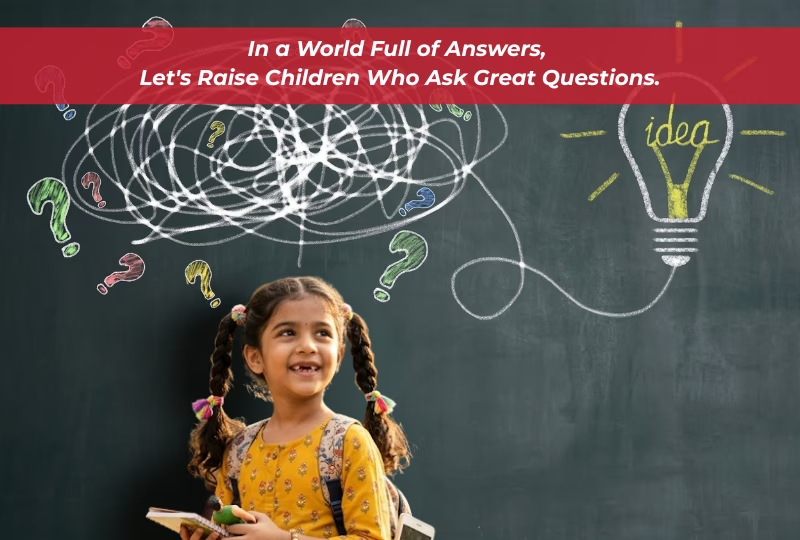
In a World Full of Answers, Let’s Raise Children Who Ask Great Questions.
According to the World Economic Forum’s Future of Jobs Report 2025, nearly 39% of today’s core workforce skills are expected to change by 2030, driven largely by developments in artificial intelligence and technology. At the same time, employers are placing greater value on analytical thinking, creativity, resilience, curiosity, and lifelong learning. The message is clear: the future belongs not to those who know the most, but to those who can think the best.
As a scientist-turned-educator and now the Founder & Principal of The Navriti School, this is perhaps the most common question I am asked by parents today:
If AI can answer everything, what should children actually be learning?
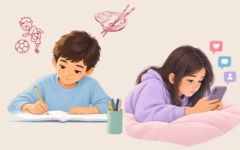
A few months ago, I watched a child use AI to solve a mathematics problem within seconds. It was impressive. But then I wondered: Did the child actually learn anything?
For decades, our education system has rewarded children for remembering facts, reproducing textbook answers, and scoring well in examinations. But today, AI can recall information far better and far faster than any human ever could.
If knowledge is no longer scarce, then what becomes truly valuable?
The answer lies in something AI cannot easily replicate: being human.
As a scientist, I have always been fascinated by the human brain. It is remarkable not because it stores information, but because it can imagine possibilities that have never existed before. It can ask meaningful questions, make ethical choices, understand emotions, and find purpose in experiences.
Research in neuroscience tells us that deeper learning happens when children analyse, evaluate, connect ideas, and create—not when they simply memorise information. This aligns with Bloom’s Taxonomy, a framework that has guided educators for decades. Yet, in many classrooms, children still spend most of their time operating at the lower levels of remembering and understanding.
Ironically, these are the very tasks that AI now performs exceptionally well.
So does this mean AI is a threat?
I believe the answer is no.
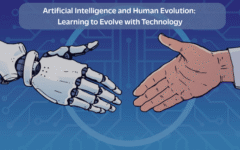
AI is not replacing the need for education. It is redefining its purpose.
Instead of asking children to memorise more, we should be helping them ask better questions. Instead of rewarding only correct answers, we should celebrate curiosity, creativity, collaboration, and critical thinking.
The World Economic Forum identifies analytical thinking as the most important skill for the future workforce, followed closely by resilience, creative thinking, motivation, and lifelong learning. These are not subjects that can be taught through worksheets alone. They are cultivated through discussions, projects, exploration, reflection, and real-world problem solving.
As parents, this shift may feel unsettling. Many of us grew up believing that academic success depended on marks and memorisation. But the world our children are inheriting is fundamentally different.
The children who will thrive are not necessarily those who know all the answers.
They will be the ones who can ask thoughtful questions, work with intelligent technologies, think independently, and remain deeply compassionate in a world increasingly powered by machines.
Perhaps the question is no longer, “Will AI replace my child’s future?”
The better question is:
“Are we equipping our children with the thinking skills to harness AI, create opportunities that don’t yet exist, and solve problems the world hasn’t even imagined?”
The children who will flourish in the decades ahead will not be those who simply know how to use AI. They will be the ones who know what questions to ask, how to evaluate the answers, how to connect ideas across disciplines, and how to transform knowledge into innovation.
Because in the age of artificial intelligence, success will not belong to those who compete against machines. It will belong to those who learn to work with them—using technology to amplify what makes us uniquely human: our curiosity, creativity, wisdom, and purpose.
_____________________________________________________________________________________
Written by Dr. Yukti Arora, Founder and Principal, The Navriti School
References
2. Bloom, B. S. Taxonomy of Educational Objectives (higher-order thinking framework).