The Science of Memory: What Stays, What Fades, and Why
December 9, 2025 2025-12-09 7:16The Science of Memory: What Stays, What Fades, and Why
The Science of Memory: What Stays, What Fades, and Why
Do you remember what you ate for lunch yesterday? Maybe you do, do you remember what you ate for lunch on this exact day last month? The answer would be a clear no. But if I ask a question that’s personal to you and holds some value even if it occurred years ago, you will remember each detail clearly. How does your brain decide and make this distinction?
Memories can be broadly divided into two categories – short and long-term memory. Short-term memory, which lasts seconds or minutes, and long-term memory, which stores life events, facts, skills, and familiar songs.
Our everyday experiences allow us to gather and store information and make a sense of the outside world. The storage of the new incoming information doesn’t happen instantly but happens through a detailed process of Memory Consolidation.
Our brain is divided in different regions, one of which is called the Temporal Lobe, located on the sides of your head.
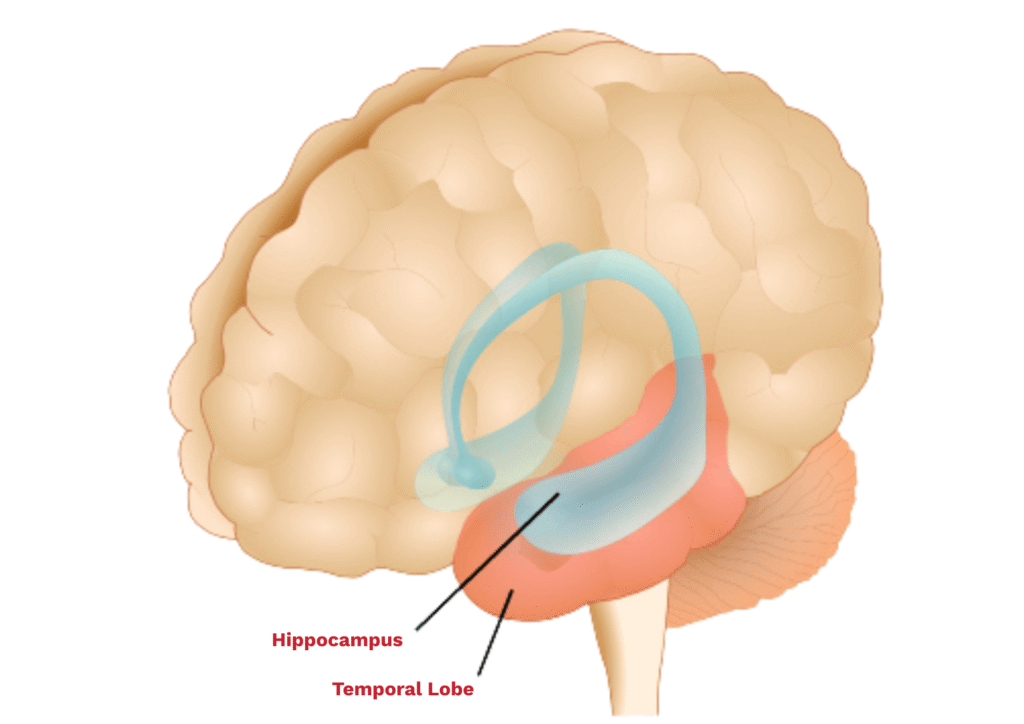
Fig 1 : Named for its characteristic resemblance to a seahorse, the hippocampus is found deep within the temporal lobes of the brain (Ref – Alcohol, Memory, and the Hippocampus).
The Temporal Lobe houses the Hippocampus, a complex brain structure, crucial for memory, learning, and spatial navigation. Memory of an experience involves inputs from various parts of the brain. When you experience something, like your favourite concert, many parts of your brain get involved: sound areas for the music, visual areas for the lights, and spatial areas for where you stood. The hippocampus links all these pieces together into one memory.
When you consciously recall this particular memory or while you’re asleep, the process of consolidating this memory in your brain begins. Initially, neural connections are formed between the hippocampus and the different brain regions involved in forming the memory of the concert. Over time, with repeated recall and during sleep, these connections grow stronger—eventually creating direct links between the auditory, visual, and spatial areas of the brain, without needing the hippocampus. At this point, the memory is stored in the brain’s outer layer, the cortex, and can be accessed directly. This is when we say the memory is fully consolidated.
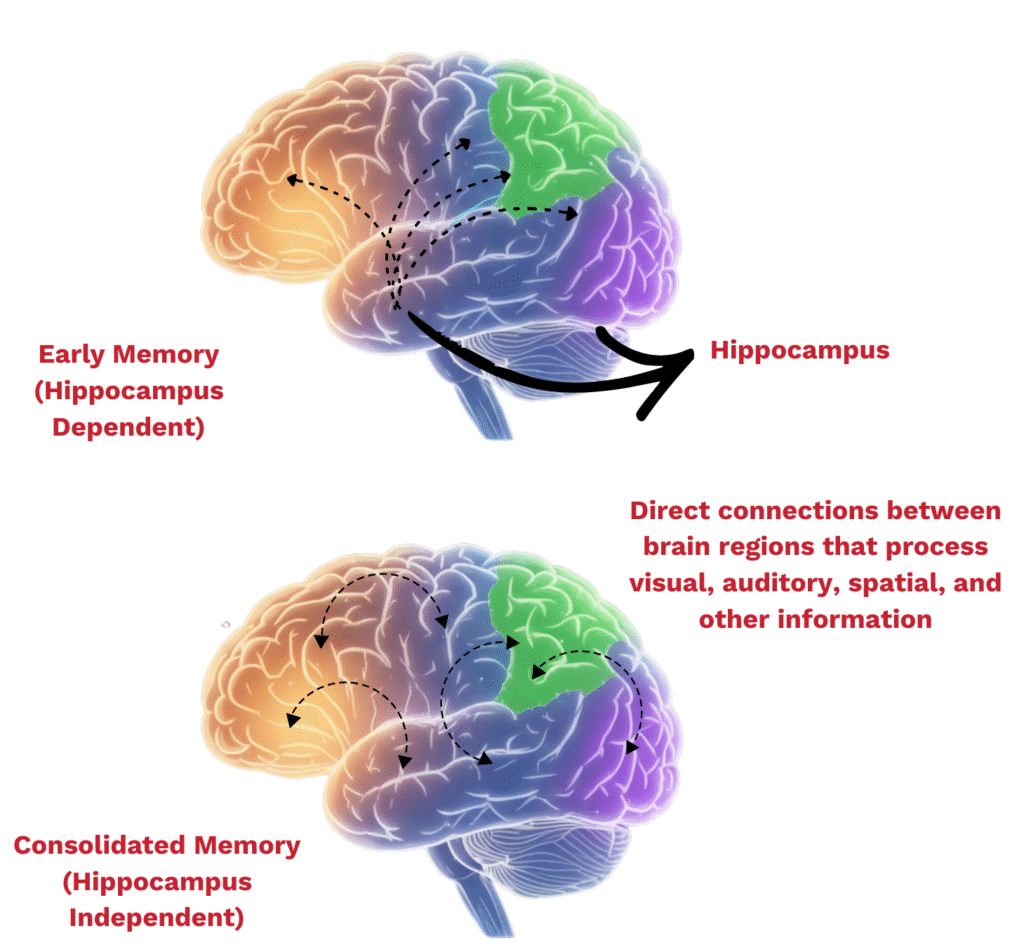
Fig 2 : Process of memory consolidation – shift in memory processing from early, hippocampus-dependent storage to later, consolidated, hippocampus-independent storage.
This process is slow forming and long-lasting where sleep also plays a crucial role. Sleep isn’t just rest—it’s an active, powerful process that supports many vital functions, including memory building.
During sleep, especially deep sleep (slow-wave sleep) and REM sleep (when most dreaming happens), the hippocampus “replays” the day’s events like a movie, allowing the brain to strengthen memories. This replay helps transfer memories from temporary storage (hippocampus) to long-term storage (cortex), as explained above. The connection between neurons firing together in the cortex is strengthened—
“cells that fire together, wire together.”
This makes memories more stable and harder to forget. Sleep also helps our brain filter out information. It guides our brain to consolidate the information that matters. Meaningful, emotionally charged, or frequently revisited information gets prioritised.
In summary, memory is not just stored—it is built, strengthened, organised, and curated. This is why sleep, repetition, emotional connection, and meaningful experiences play such a powerful role in shaping what we ultimately remember.
The learning ecosystem at The Navriti School is intentionally designed to support the brain’s natural process of memory formation. We integrate sensory-rich environments, structured routines, and spaced learning—while also emphasising the often-overlooked role of sleep in strengthening neural connections. By helping children understand healthy sleep habits and creating a rhythm of learning that doesn’t overwhelm the brain, we ensure that what they learn is not just remembered but meaningfully consolidated. __________________________________________________________________
Written by Kangna Verma, Admission and Communication Specialist, The Navriti School
Further Reading :
Sleep in children: physiology and update of a literature review