Beyond Classrooms : Bringing back the Joy of Play
November 7, 2025 2025-11-07 6:23Beyond Classrooms : Bringing back the Joy of Play
Beyond Classrooms : Bringing back the Joy of Play
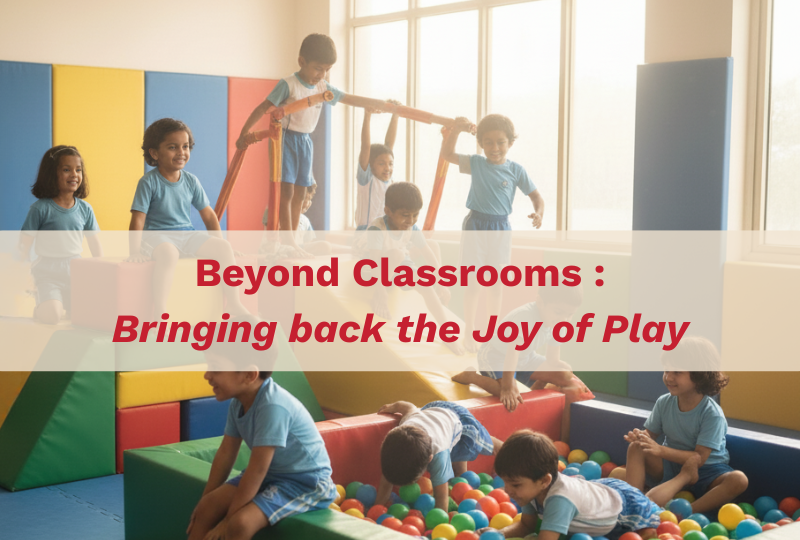
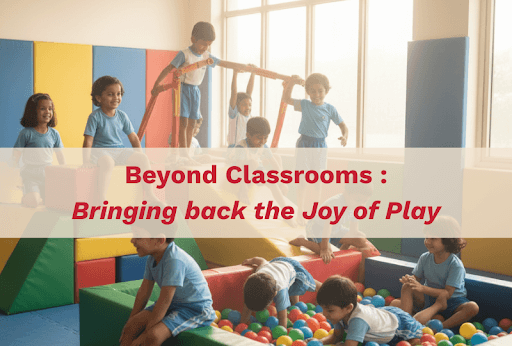
When you reflect back on your childhood, do you remember it being filled with muddy clothes, breathless evenings, as a result of constant running and endless laughter with your friends? For most of the children today, playtime has significantly been taken over by screens and online video games resulting in a more sedentary lifestyle. We’ve often neglected the significant effects of Physical Activity on both our mind and body, often considering it to be secondary to academic performance. Indulging in a life of movement and exercise can uplift your emotional, cognitive and physical well-being, reinforcing the importance of the ancient principle, “mens sana in corpore sano” (i.e., a sound mind in a sound body).
Integrating movement in life from an early start is necessary for ample benefits, it is also important for your child to balance their time between sitting in the classroom and playing in the grounds. Movement is medicine. When children exercise, the blood circulation in their body increases, physical activity triggers the release of neurotransmitters – dopamine, serotonin and certain endorphins resulting in stabilisation of mood and motivation. Physical activity also increases levels of specific growth factors which drive proper brain development and recovery. Outdoor activity enriches the gut microbiome, nurturing bacteria that produce tiny molecules called the short-chain fatty acids which are linked to emotional resilience and cognitive performance. Studies show that active children display better focus, emotional regulation, and social empathy than their sedentary peers, as physical movement activates parts of the brain involved in logical thinking and memory (pre-frontal cortex and temporal lobe).
Beyond the brain, play also shapes personality and relationships. Your child’s intrinsic motivation to play helps build their personality, social skills and a better bonding with their peers. Research also suggests that parts of the brain, the pre-frontal cortex and temporal lobe are more in volume in individuals who exercise regularly as compared to individuals who don’t.
At Navriti, we understand that your child spends a major part of their day at the school. We also acknowledge the concern of most parents today : increased irritability and screen addiction in children. Through our immersive learning spaces like the Kids’ soft gym, outdoor sports area, Martial Arts Studio, Yoga Room and many more, we have ensured that children get a 360-degree learning experience. With a careful attention to their mental and physical well-being, The Navriti School aims to strike a perfect balance between academics and physical activity.
__________________________________________________________________
Written by Kangna Verma, Admission & Communication Specialist, The Navriti School
References for Further Reading :
- Physical Activity and Brain Health
- Bidirectional Association between Physical Activity and Dopamine Across Adulthood—A Systematic Review
- How exercise influences the brain: a neuroscience perspective
- Impact of outdoor nature-related activities on gut microbiota, fecal serotonin, and perceived stress in preschool children: the Play&Grow randomized controlled trial
- Gut microbiota-derived short-chain fatty acids and depression: deep insight into biological mechanisms and potential applications