A Day in the Life at Navriti: What Holistic Education Looks Like from Nursery to Grade 5
May 18, 2026 2026-08-20 8:08A Day in the Life at Navriti: What Holistic Education Looks Like from Nursery to Grade 5
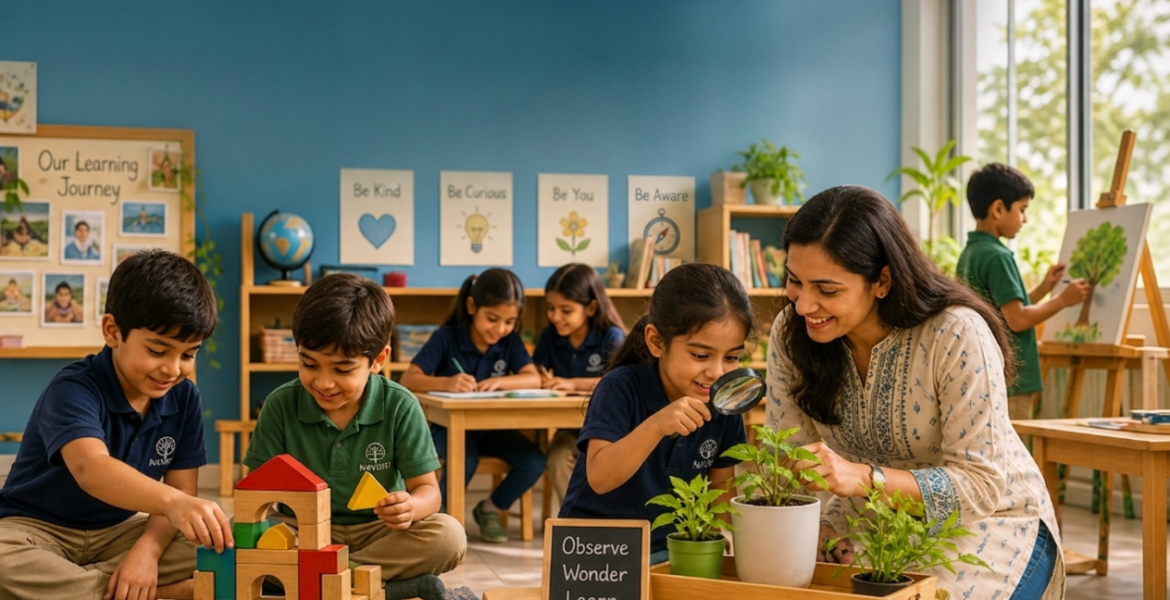
A Day in the Life at Navriti: What Holistic Education Looks Like from Nursery to Grade 5
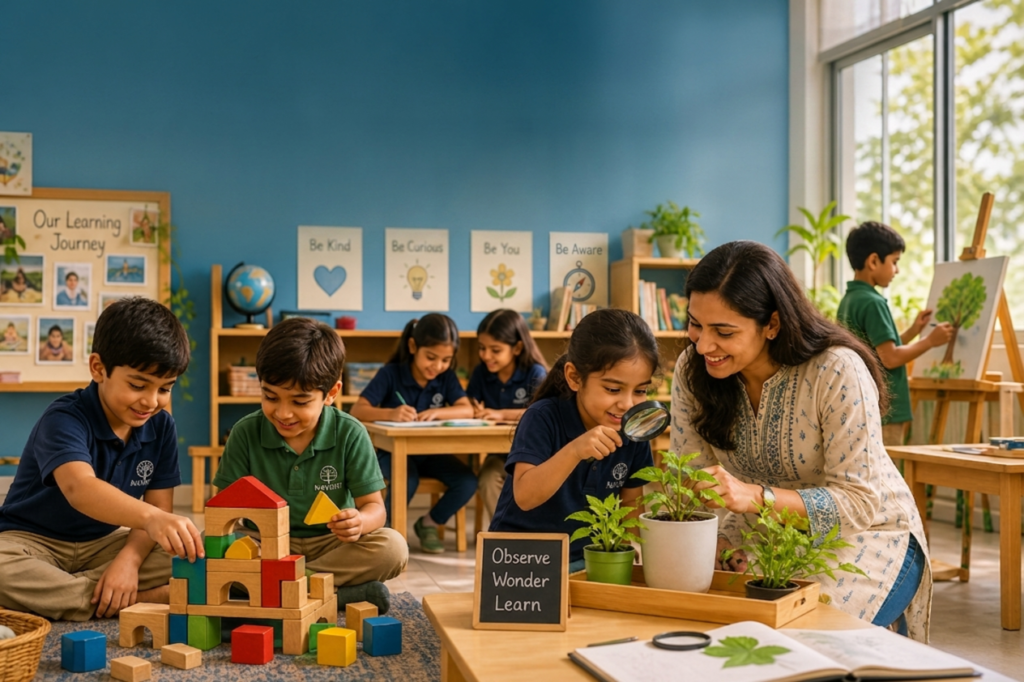
Research shows that 90% of brain development occurs before age five, yet most traditional schools still rely on methods designed centuries ago. At Navriti, A Day in the Life at Navriti: What Holistic Education Looks Like from Nursery to Grade 5 reveals how science-informed education transforms young minds through curiosity-led learning and confidence-building experiences.
What does it mean when children arrive excited each morning, when learning feels like play, and when education nurtures the whole child rather than just academic performance? The answer lies in understanding how holistic education creates emotionally safe learning environments where every moment becomes an opportunity for growth.
Key Takeaways
• Curiosity-led learning drives every activity, from morning circles to afternoon explorations
• Science-informed teaching methods support natural brain development patterns in children aged 3-10
• Real-world learning experiences connect classroom concepts to meaningful, hands-on discovery
• Emotionally safe learning environments foster confidence alongside academic growth
• Future-ready skills develop naturally through play, collaboration, and guided exploration
Morning Rhythms: How A Day in the Life at Navriti Begins with Wonder
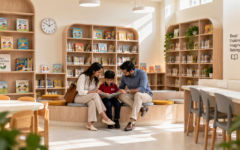
The day starts differently here. Instead of rigid bell schedules, children flow into joyful classrooms designed for exploration. Morning circles bring together Nursery through Grade 5 students in age-appropriate groups, where teachers observe each child’s energy, curiosity, and readiness to learn.
Nursery and Pre-K (Ages 3-4): The youngest learners begin with sensory exploration stations. Today, they might investigate how water moves through different materials, building foundational science concepts through touch, sight, and wonder.
Kindergarten to Grade 2 (Ages 5-7): These children engage in collaborative problem-solving. Perhaps they’re designing bridges for toy cars, naturally integrating engineering, math, and teamwork skills.
Grades 3-5 (Ages 8-10): Older students dive deeper into inquiry-based projects. They might be researching local ecosystems, connecting classroom learning to their immediate environment.
This approach reflects precision schooling principles, where each child’s developmental stage guides the learning experience.
Learning Through Discovery: What Holistic Education Looks Like in Action
Traditional education often separates subjects into isolated boxes. At Navriti, holistic child development means learning flows naturally across disciplines. When Grade 1 students plant seeds, they’re simultaneously exploring:
- Science: Plant biology and growth cycles
- Math: Measuring growth, counting days, basic data collection
- Language: Describing observations, learning new vocabulary
- Social Skills: Sharing tools, taking turns, collaborative care
This integrated approach mirrors how children naturally learn. Rather than forcing artificial subject boundaries, teachers create experiential learning opportunities that honor how young minds actually develop.
The neuroscience-informed approach ensures activities match children’s developmental readiness. Three-year-olds need sensory-rich experiences, while eight-year-olds can handle more complex reasoning challenges.
Afternoon Adventures: From Nursery to Grade 5 Learning Journeys
As the day progresses, A Day in the Life at Navriti showcases how different age groups engage with increasingly sophisticated concepts while maintaining the joy of discovery.
Nursery Focus: Building Foundation Skills
Afternoon activities center on nurturing young minds through:
- Sensory play that develops fine motor skills
- Story circles that build language and listening abilities
- Creative expression through art, music, and movement
- Social interaction in small, supportive groups
Primary Years: Expanding Horizons
Older students tackle more complex challenges:
- Project-based learning that spans multiple weeks
- Community connections through local field studies
- Creative problem-solving in collaborative teams
- Independent thinking guided by mentor teachers
The beauty lies in how these experiences build upon each other. A Nursery child’s fascination with water play evolves into a Grade 5 student’s sophisticated understanding of water cycles and environmental conservation.
The Science Behind Holistic Education at Navriti
What makes this approach so effective? Research-informed education reveals that children learn best when:
🧠 Multiple senses engage simultaneously – Learning becomes more memorable and meaningful
🤝 Social connections support academic growth – Collaborative learning strengthens both knowledge and emotional intelligence
🌱 Natural curiosity drives exploration – Child-led inquiry creates deeper understanding than forced instruction
💪 Confidence builds through supported challenges – Success in manageable risks develops resilience and self-efficacy
This scientific foundation ensures that A Day in the Life at Navriti isn’t just engaging—it’s optimally designed for how children’s brains actually develop and learn.
Beyond Academics: What Holistic Education Looks Like for Emotional Growth
Academic excellence emerges naturally when children feel emotionally secure and intellectually stimulated. At Navriti, confidence-building education happens through:
Mindful transitions between activities help children regulate emotions and maintain focus. Teachers recognize that a frustrated four-year-old needs different support than an overwhelmed eight-year-old.
Choice within structure allows children to follow their interests while meeting learning objectives. This balance develops both independence and responsibility.
Celebration of process over product means children learn to value effort, creativity, and problem-solving rather than just “correct” answers.
The result? Children who approach challenges with curiosity rather than fear, who collaborate naturally, and who develop the emotional intelligence essential for future success.
Real Stories: A Day in the Life at Navriti Through Parent Eyes
Parents consistently notice changes in their children within weeks of joining Navriti. Five-year-old Arjun, who previously resisted any form of learning, now asks endless questions about everything from ant behavior to cloud formation. Eight-year-old Priya has developed confidence to share her ideas in group settings, a transformation her parents attribute to the emotionally safe learning environment.
These aren’t isolated success stories. They reflect the natural outcome when education honors how children actually learn and grow.
Preparing for Tomorrow: Future-Ready Skills in Early Years
While other schools focus on test preparation, Navriti cultivates skills children will need in 2040 and beyond:
- Critical thinking through open-ended exploration
- Collaboration in diverse, dynamic groups
- Adaptability when projects take unexpected directions
- Communication across different learning styles and perspectives
- Creativity in problem-solving and self-expression
These capabilities develop naturally through A Day in the Life at Navriti because the learning environment mirrors real-world complexity rather than artificial academic isolation.
Conclusion
A Day in the Life at Navriti: What Holistic Education Looks Like from Nursery to Grade 5 reveals education’s true potential when we honor how children naturally learn and grow. Through curiosity-led learning, science-informed teaching, and emotionally safe environments, young minds flourish in ways that prepare them not just for tests, but for life.
The transformation happens gradually, then suddenly. Children who once dreaded school become eager learners. Parents who worried about academic pressure discover their children are exceeding expectations while maintaining their natural joy and curiosity.
Ready to see this approach in action? Schedule a school tour to experience firsthand how holistic education creates confident, capable, and curious learners. Your child’s educational journey deserves this level of thoughtful, science-informed care.