What a Padma Shri Physicist Taught Us About How Children Learn: Insights from Navriti’s Advisory Board
June 10, 2026 2026-08-20 8:08What a Padma Shri Physicist Taught Us About How Children Learn: Insights from Navriti’s Advisory Board

What a Padma Shri Physicist Taught Us About How Children Learn: Insights from Navriti’s Advisory Board
Most school advisory boards are ceremonial. A set of impressive names on a website, occasionally called upon for a quote. Parents rarely think about them; schools rarely use them.
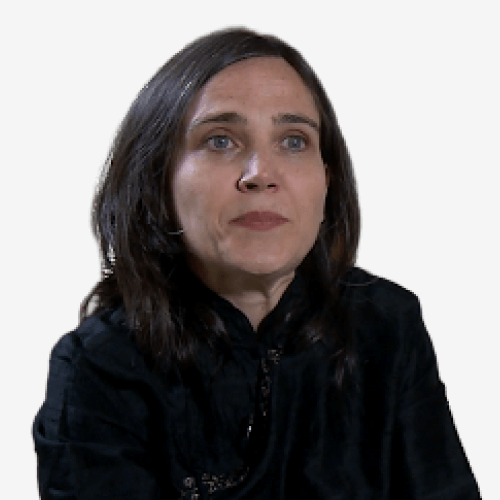
Navriti’s approach is different. The school’s Advisory Board — which includes physicists, biologists, and science communicators with active research and teaching careers — has genuine influence on how learning is designed, not just how it is described. One person on that board is Professor H.C. Verma, a physicist awarded the Padma Shri for his contribution to physics education in India. What he understands about learning has shaped not just university physics, but the question every good school should be asking: what does it actually take for a child to understand something?
Key Takeaways
• Real understanding is different from correct answers — and good physics education, like good early years education, is built on that distinction
• Curiosity is not a personality trait — it is something schools can actively build or actively kill
• Children learn through questions, not statements — the best teachers ask more than they tell
• The early years are where learning habits form — what happens in nursery and primary school shapes how a child approaches difficulty for the rest of their education
• A school’s curriculum should reflect how brains actually work, not how syllabuses are traditionally organised
What a Physicist Knows About How Children Learn 🔬
Prof. Verma’s most influential work — his two-volume physics text, used by generations of students preparing for competitive examinations — is notable for one reason above all others: it treats conceptual understanding as the goal, not the side effect. The problems in his books can’t be solved by memorising a formula. They require a student to actually understand what is happening.
This distinction — between knowing the answer and understanding the idea — is not unique to physics. It is, arguably, the central question in education from the nursery years onwards.
A child who can count to twenty without understanding what numbers represent is not learning mathematics. A child who can recite the water cycle without understanding why water evaporates is not learning science. The performance of knowledge and actual knowledge are different things, and schools that confuse them tend to produce children who are good at school but struggle when problems stop following the expected format.
The Curiosity Question 💡
Ask Prof. Verma what separates a student who goes on to genuinely love learning from one who doesn’t, and the answer isn’t intelligence or hard work. It’s whether their curiosity was protected or punished in the early years.
Young children are, by default, curious. They ask questions constantly. They want to know why things happen. They experiment — dropping objects, mixing things, testing limits — not because they’re being disruptive, but because that’s how human brains are designed to learn.
What happens next depends almost entirely on the environment they’re in. A classroom that rewards right answers and penalises wrong ones will, over time, teach children to stop guessing — which means teaching them to stop thinking. A classroom that treats wrong answers as useful data, that asks “interesting, why did you think that?” rather than moving quickly to the correct response, does something entirely different.
This is not a philosophy Navriti holds as a brand position. It is a principle that comes directly from how the brain develops in the Neev years — and it’s one the Advisory Board has helped translate into how the school structures learning from the earliest age.
Science-Informed Teaching Is Not the Same as Science-Themed Teaching 🧪
There’s a category error that appears frequently in school marketing: a school with a robotics lab or a “science week” describes itself as science-informed. These things can be good. But they are not the same as building a curriculum around what research on brain development and learning science actually recommends.
Science-informed teaching means the way a concept is introduced, practised, and assessed reflects how children at that developmental stage can actually build durable understanding. It means spaced repetition rather than cramming. It means concrete before abstract. It means allowing children to experience confusion before resolution, because the struggle of not-yet-knowing is itself what builds comprehension.
The involvement of people like Prof. Verma in Navriti’s curriculum design is not decorative. It is a check against the many common practices in schooling that feel productive but aren’t: excessive drilling, rushing to coverage, rewarding performance over understanding.
What This Means for Parents Choosing a School 🏫
Most school visits focus on visible things: the building, the playground, the ratio of smartboards to classrooms. These things matter, but they don’t tell you much about how learning actually happens inside the school.
Better questions to ask: what happens when a child gets something wrong? Does a teacher’s first response reward thinking or reward correctness? Are children given time to be confused, or is confusion a sign that the lesson needs to move on? Is curiosity treated as an asset or an inconvenience?
These questions point to something that the Advisory Board’s involvement at Navriti is designed to protect: that learning, properly done, looks less like instruction and more like discovery with good guidance.
If you’re comparing schools in Gurgaon for your child at nursery or primary level, the questions about curriculum philosophy matter as much as the questions about facilities. A school that can tell you why it does things the way it does — and point to the thinking behind those choices — is a different institution from one that can only show you what it looks like.
Conclusion
Prof. Verma’s contribution to physics education in India has been to insist that understanding cannot be shortcut — that a student who has memorised without comprehending hasn’t actually learned anything durable. That principle applies equally to a seven-year-old in a Gurgaon classroom learning to read, add, and wonder about the world.
The schools that take this seriously — that build their curriculum around how children actually develop understanding rather than how much content can be delivered — produce something different from the schools that don’t. Not just better exam results, eventually. Better thinkers, earlier.
That’s what it means for a physicist to help design a school’s learning approach. And it’s worth knowing about when you choose where your child spends the next several years.