Why a Child’s First School Matters More Than Their Last: The Case for Getting Early Years Right
June 16, 2026 2026-08-20 8:08Why a Child’s First School Matters More Than Their Last: The Case for Getting Early Years Right
Why a Child’s First School Matters More Than Their Last: The Case for Getting Early Years Right
There’s a particular kind of school anxiety that arrives with secondary admissions — the IITs, the board exams, the university applications. Everything feels high stakes. Everything feels like it’s being decided.
This is understandable, but it gets the sequence wrong. The decisions that have the largest impact on how a child learns — how they handle difficulty, whether they believe they can figure things out, whether they find understanding satisfying or threatening — are made much earlier. Those habits’re made in nursery and the first few years of primary school, when the brain is developing at a pace it will never match again.
Getting the early years right is not a nice-to-have. It’s the leverage point.
Key Takeaways
• 90% of brain development happens before age 6 — the early years are not preparation for “real” education, they are real education
• Learning habits formed in nursery and primary school are durable — children who develop curiosity and resilience early tend to carry them forward
• The relationship between a child and difficulty is established in the first school years — and it shapes everything that follows
• Early years education done well looks different from traditional schooling — more exploratory, more physical, more play-based — and that’s backed by research
• The best nursery and primary schools in Gurgaon understand this distinction and build their curriculum accordingly
What ‘90% by Age 6’ Actually Means for a School 🧠
The statistic is familiar: 90% of brain development happens before age 6. But it’s one of those facts that gets repeated without much thought about what it implies.
It doesn’t mean a child’s intelligence is fixed by the time they start primary school. It means that the neural pathways — the connections that allow for learning, emotional regulation, language, reasoning — are being built at extraordinary speed during these years. The experiences a child has during this period aren’t just memories. They are, quite literally, the architecture of their brain.
A school that understands this will not rush to formalise academic content in the nursery years. A three-year-old learning to sit still and copy letters is not getting ahead — they’re using developmental energy for something that could wait two years, at the expense of the sensory exploration, physical movement, and language-rich interaction that brain development at that age actually requires.
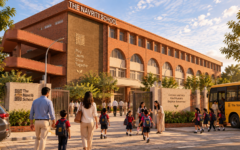
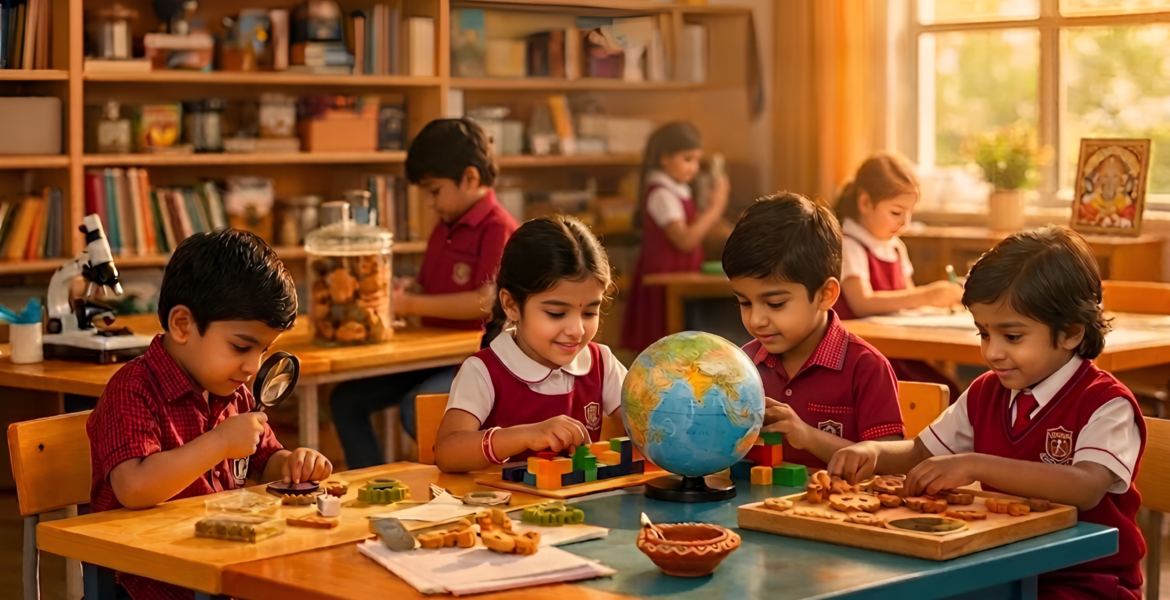
Navriti’s Neev programme is built around this understanding. The pre-primary years at Navriti are not a warm-up for “real school.” They are designed around what the research on early childhood development says children aged 3–6 genuinely need in order for their brains to develop the foundations for later learning.
The Learning-Habit Window 🌱
There’s a related point that matters at least as much. Before habits become conscious, they’re formed. And the habits a child develops about learning — in the first five years of school — shape their relationship with education for a very long time.
Consider two common classroom experiences:
In one classroom, wrong answers are marked visibly, moved past quickly, and treated as the end of a process. Children learn — not from instruction but from observation — that the point of school is to not be wrong.
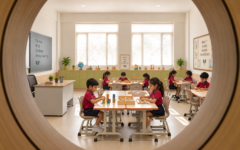
In another classroom, wrong answers are treated as information. “Interesting — why did you think that?” becomes a routine question. Children learn, again from observation rather than instruction, that thinking is the point, and being wrong is a step inside a process rather than the end of one.
The children in the second classroom are not smarter. They have, over time, developed a different relationship with difficulty. They’re more willing to attempt things they’re uncertain about. They recover from failure faster. They ask more questions. These traits compound over years and produce meaningfully different educational trajectories.
This is what genuinely good early years education builds. Not content knowledge that could wait. A relationship with learning that couldn’t.
Why Play-Based Learning Is Not the Opposite of Academic Learning 🎨
One of the most persistent misunderstandings about early years education is that play-based learning and academic learning are in tension. That allowing children to learn through exploration, building, and play is “letting them have fun” rather than preparing them for school.
The neuroscience is clear on this. Play, for young children, is learning. When a four-year-old builds a tower and it falls, they’re developing spatial reasoning, cause-and-effect understanding, and tolerance for failure. When a five-year-old negotiates roles in a pretend game, they’re developing theory of mind — the ability to understand that other people have thoughts and perspectives different from their own — which is a precursor not just to social skill but to reading comprehension and collaborative work.
None of these things are built faster by sitting children down earlier with worksheets. The research on early academic formalisation is consistent: it produces short-term gains and long-term costs, particularly in attitudes towards learning and intrinsic motivation.
Schools that understand this design their early years environments to support the kind of play that is also learning — structured enough to be purposeful, open enough to be genuinely exploratory.
What to Look For in a Nursery and Primary School in Gurgaon 🏫
When visiting early years schools, the questions worth asking are different from the questions most parents bring:
- How much of the day involves child-led activity versus teacher-directed instruction?
- What does outdoor time look like — free play, or structured activity?
- How do teachers handle a child who refuses to participate in something?
- How is assessment done in nursery? (If the answer is “we test them,” that’s relevant information.)
- What is the transition from nursery to Grade 1 like? Is it gradual or abrupt?
The best schools in Gurgaon for young children can answer these questions specifically and with clear rationale. They can tell you not just what they do but why — and the why should connect to something other than tradition or parent preference.
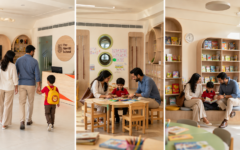
If you’re currently weighing options for nursery or early primary admission, Navriti’s admissions process includes an open day where you can observe the Neev programme in operation. Seeing a classroom in use is worth more than any prospectus.
The Longer View
The parents who are most relaxed about secondary school admissions are, in many cases, the ones who made thoughtful choices about nursery and primary school. Not because those early choices guaranteed outcomes, but because children who developed good learning habits early tend to handle later challenges with more resilience.
The anxiety is natural. But it’s worth directing some of it towards the earlier decision. The first school matters more than most parents realise — and considerably more than the last one.
Conclusion
Early years education is not a preamble to “real” learning. It is where the most important learning happens — not content, but how to learn. How to handle not knowing something. How to persist. How to be curious. These things, built well in the first years of school, have a longer reach than any subject knowledge acquired later.
Choosing a nursery and primary school in Gurgaon with this in mind changes what you’re looking for. It shifts the question from “which school looks best?” to “which school understands children best?” That’s a different search — and a more worthwhile one.