Experiential Learning in Gurgaon Schools: What It Looks Like and Why It Matters for 2027-28
August 27, 2026 2026-08-31 10:00Experiential Learning in Gurgaon Schools: What It Looks Like and Why It Matters for 2027-28
Experiential Learning in Gurgaon Schools: What It Looks Like and Why It Matters for 2027-28
A six-year-old child in Gurgaon doesn’t learn about the concept of “buoyancy” by reading a definition from a blackboard. Instead, they stand by a water trough, predicting which wooden blocks will float and which stones will sink, their eyes wide with the thrill of a discovery they made themselves. This shift, from being a passive listener to an active explorer, is the heart of experiential learning. In a city that moves as fast as Gurgaon, education is undergoing a quiet but profound transformation, moving away from the “industrial model” of memorization toward a science-informed, human-centric approach.
As we look toward the 2027-28 academic cycle, parents are increasingly realizing that academic pressure alone doesn’t build a successful adult. The world our children will inherit requires more than just high scores; it demands adaptability, empathy, and the ability to solve problems that don’t have back-of-the-book answers. This is why Experiential Learning in Gurgaon Schools: What It Looks Like and Why It Matters for 2027-28 has become the central theme for families planning their child’s educational journey.
Key Takeaways
- Active Discovery: Experiential learning replaces rote memorization with hands-on exploration, making lessons “stick” through personal experience.
- Future-Ready Skills: By focusing on problem-solving and critical thinking, children develop the agility needed for the 2030s and beyond.
- Emotional Safety: Learning is most effective when children feel seen and supported, blending intellectual growth with emotional intelligence.
- Evidence-Based: Modern experiential schools use research-informed methods to align teaching with how a child’s brain naturally develops.
What Experiential Learning Actually Looks Like in the Classroom
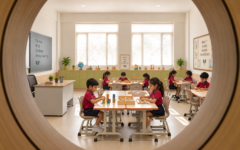
For many of us, school was a place of quiet rows and heavy backpacks. However, Experiential Learning in Gurgaon Schools: What It Looks Like and Why It Matters for 2027-28 paints a very different picture. When you walk into a joyful classroom, you might not see a teacher lecturing at the front. Instead, you see a facilitator moving between groups of children who are deeply immersed in a project.
In these environments, a math lesson on measurements might involve baking a cake or designing a small garden plot. A history lesson might involve “interviewing” a historical figure portrayed by a peer or building a model of an ancient irrigation system. This learning through discovery ensures that the “why” behind every concept is clear. When a child understands the purpose of what they are learning, their natural curiosity-led learning takes over, and the need for external “pushing” disappears.
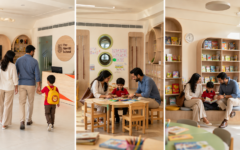
At Navriti, we believe that learning environments matter immensely. A space designed for experiential learning is flexible, it has corners for quiet reflection and open areas for collaborative builds. It is a place where a mistake isn’t a mark off a grade, but a valuable data point in a scientific experiment. This creates an emotionally safe learning environment where children aren’t afraid to say, “I don’t know yet, let me try another way.”
Why This Approach is Vital for the 2027-28 Cohort
You might wonder why there is such a sudden urgency around this style of education. The answer lies in the shifting landscape of the global economy and the rise of technology. As we look at Experiential Learning in Gurgaon Schools: What It Looks Like and Why It Matters for 2027-28, we must acknowledge that AI is changing the skills children need. If a machine can provide facts in seconds, the human advantage lies in what we do with those facts.
Future-ready skills like cognitive flexibility, social influence, and complex problem-solving cannot be taught through a screen or a standard worksheet. They are “muscles” that must be exercised through real-world learning experiences. By the time the children entering school in 2027 graduate, the most valuable currency will be their ability to learn, unlearn, and relearn.
The Benefits of Hands-On Learning
Why do thoughtful parents choose experiential schools?
- Long-term Retention: We remember 10% of what we read, but 90% of what we “do.”
- Confidence Building: Successfully completing a complex project builds a deep-seated “I can” attitude.
- Holistic Child Development: It engages the head (logic), the heart (empathy), and the hands (skill).
- Science-Informed: It aligns with how the brain builds neural pathways through multi-sensory input.
Parents today are looking beyond exam results because they want their children to be happy and capable, not just “well-schooled.” This is a shift toward confidence-building education where the goal is to nurture a child’s unique spark rather than molding them into a pre-defined shape.
Connecting Science with Human Care
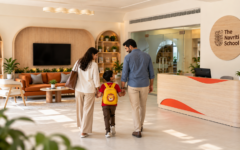
At the heart of the best experiential school Gurgaon options is a foundation of science-informed teaching. We know more about the developing brain today than ever before. Research shows that stress inhibits learning, while curiosity enhances it. This is why a school’s atmosphere, the warmth of the greeting at the gate, the way a teacher handles a conflict between friends, is just as important as the curriculum.
When children feel seen and respected, their brains are in the optimal state for growth. This is what we call precision schooling, where the education is tailored to the child’s developmental stage. In the 2027-28 school year, the schools that stand out will be those that treat holistic child development as a rigorous science, not just a buzzword. They will be places where nurturing young minds means protecting their sense of wonder while challenging their intellect.
For parents currently exploring [nursery admissions in Gurgaon](https://navritischool.com/blogs/nursery-admissions-2027-28-in-gurgaon-when-to-start, what-to-look-for, and-how-to-decide/), the criteria for “the best” are changing. It is no longer about the biggest campus or the most expensive air conditioning; it is about the quality of the interactions between teachers and students. It is about whether the school feels like a community of explorers.
How to Evaluate a School’s Experiential Approach
If you are visiting schools for the upcoming sessions, how can you tell if the “experiential” claim is genuine? Here are a few things to look for:
- Student Work: Look at the walls. Are there thirty identical drawings of a flower, or are there diverse projects that show individual thought and messy, real-world attempts?
- Teacher Role: Is the teacher the “sage on the stage” or the “guide by the side”? Watch how they interact with children who are struggling.
- Nature Integration: Does the school use the outdoors as a classroom? Education beyond exams often happens in the garden or the playground.
- Questions over Answers: Do the teachers ask open-ended questions that encourage children to think deeper, or do they only look for the “right” answer?
Choosing a school is one of the most significant decisions you will make. It’s about finding a partner who values your child’s curiosity and confidence as much as you do.
Conclusion
The journey toward 2027-28 is an opportunity to redefine what success looks like for our children. Experiential Learning in Gurgaon Schools: What It Looks Like and Why It Matters for 2027-28 is not just an educational trend; it is a commitment to raising a generation that is resilient, thoughtful, and deeply curious about the world.
By choosing a school that prioritizes learning through discovery and emotionally safe learning environments, you are giving your child a gift that lasts a lifetime: the love of learning. As you begin your search, ask yourself: In fifteen years, do I want my child to remember the answers, or do I want them to know how to ask the right questions?
If you are ready to see what this looks like in practice, we invite you to explore how we are shaping the future of education in Gurgaon. The future belongs to the curious.