Teachers’ Day 2026: What Great Teaching Actually Looks Like in a Primary Classroom
September 14, 2026 2026-09-14 7:47Teachers’ Day 2026: What Great Teaching Actually Looks Like in a Primary Classroom
Teachers’ Day 2026: What Great Teaching Actually Looks Like in a Primary Classroom
On September 5th, classrooms across India will fill with the scent of fresh marigolds and the sound of children rehearsing speeches. But beyond the cards and the ceremonies, a deeper shift is happening in how we define excellence in the classroom. In a world where information is available at the click of a button, the role of a teacher has moved from being a source of answers to being a designer of experiences.
Teachers’ Day 2026: What Great Teaching Actually Looks Like in a Primary Classroom isn’t just about celebrating the person at the front of the room; it is about recognizing the science-informed magic that happens when a child’s natural curiosity meets a mentor who knows how to nurture it. Great teaching today is less about what a child can repeat and more about how a child can think, feel, and explore.
Key Takeaways
- The Shift in Role: Modern teaching focuses on “learning through discovery” rather than the traditional lecture-style delivery of facts.
- Emotional Safety: Great teachers prioritize creating an emotionally safe environment where children feel brave enough to make mistakes.
- Science-Informed Methods: High-quality instruction uses research into how the brain learns to ensure information actually sticks.
- Real-World Context: Lessons are no longer confined to textbooks; they are built around real-world problems that matter to the child.
The Quiet Power of an Emotionally Safe Learning Environment
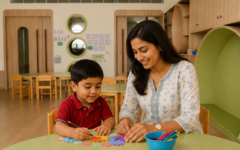
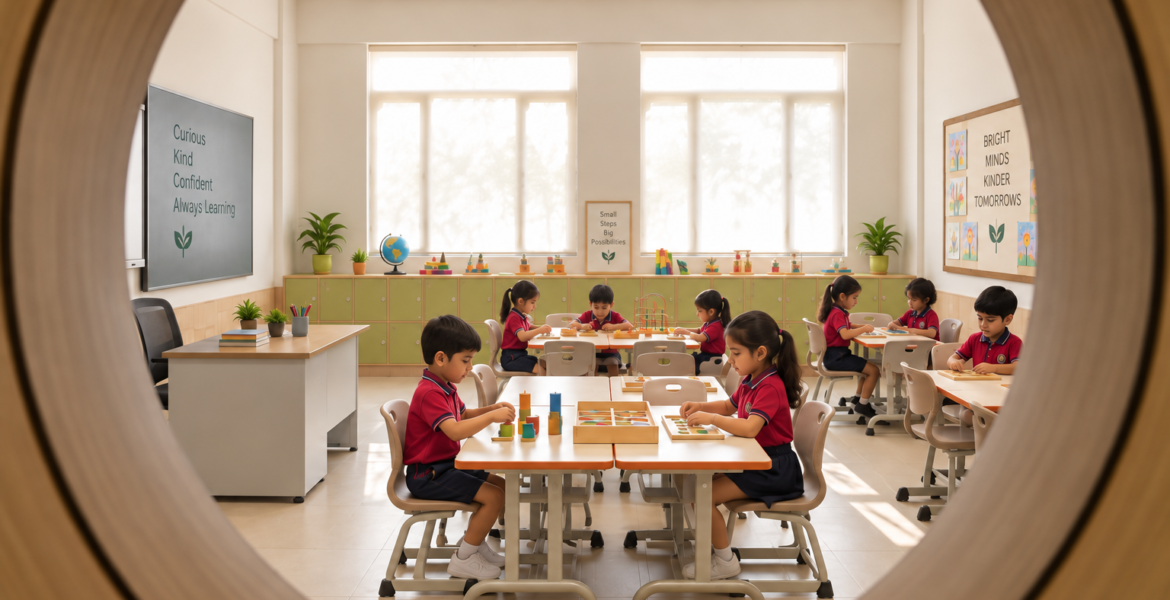
If you walk into a primary classroom where great teaching is happening, the first thing you notice isn’t the silence. It is the hum of purposeful activity. You will see a teacher who spends more time at eye-level with children than standing behind a desk.
In 2026, we understand more than ever that a child’s brain cannot learn if it doesn’t feel safe. When a teacher greets a student by name, notices a change in their mood, or encourages a “spectacular mistake,” they are doing more than being kind. They are building an emotionally safe learning environment that lowers stress and opens the mind to complex thought.
This sense of safety is the bedrock of confidence-building education. When a child knows they won’t be shamed for a wrong answer, they become willing to take the intellectual risks necessary for growth. This is the heart of what makes the best primary schools in Gurgaon stand out, they prioritize the human connection as the gateway to academic success.
Science-Informed Teaching: Moving Beyond Rote Learning
For decades, primary education was often a race to finish the syllabus. However, science-informed teaching has changed the finish line. Great teachers now use their knowledge of cognitive science to help children move information from short-term memory into long-term understanding.
In a great primary classroom, you won’t see endless copying from the blackboard. Instead, you might see:
- Retrieval Practice: Quick, low-stakes quizzes or “brain dumps” that help children practice pulling information out of their heads.
- Spaced Repetition: Reaching back to concepts learned last week or last month to keep the “brain’s bridge” strong.
- Concrete to Abstract: Using physical objects, beads, blocks, or plants, to explain abstract mathematical or scientific concepts.
This approach ensures that holistic child development isn’t just a buzzword. It is a methodical way of ensuring that every child, regardless of their starting point, can master the foundations of literacy and numeracy through a precision schooling approach.
Teachers’ Day 2026: What Great Teaching Actually Looks Like in a Primary Classroom and the Curiosity Quotient
Have you ever noticed how a five-year-old can ask “Why?” fifty times in a single hour? Great teaching doesn’t silence those questions; it harvests them. Curiosity-led learning is a hallmark of the modern classroom. Instead of telling children that plants need sunlight, a great teacher asks, “What do you think would happen if we put one plant in a dark cupboard and one on the windowsill?”
By letting children lead the discovery, the teacher becomes a facilitator of experiential learning. This isn’t just about “doing activities.” It is about the reflection that follows the activity. It is about asking, “What did we see? Why did that happen? What should we try next?”
| Feature | Traditional Teaching | Great Primary Teaching in 2026 |
|---|---|---|
| Primary Goal | Covering the syllabus | Mastery and deep understanding |
| Student Role | Passive listener | Active investigator |
| Assessment | End-of-term exams | Continuous, helpful feedback |
| Content | Abstract textbook facts | Real-world learning experiences |
| Environment | Row-seated, teacher-centric | Collaborative, child-centric |
Building Future-Ready Skills Through Real-World Contexts
When we discuss Teachers’ Day 2026: What Great Teaching Actually Looks Like in a Primary Classroom, we must talk about the “why” behind the learning. Children are incredibly perceptive. They want to know why they are learning what they are learning.
A great teacher connects the classroom to the world outside the school gates. Whether it’s calculating the cost of ingredients for a class bake sale or writing letters to the local municipality about a park, these experiences build future-ready skills. They teach children that their voice matters and that their education is a tool they can use to change their environment.
This focus on relevance is what many parents are really prioritising when they look for a school today. They aren’t just looking for high marks; they are looking for a school that prepares their child for a world where adaptability and problem-solving are the most valuable currencies.
The Role of Technology: A Tool, Not a Teacher
In 2026, technology is everywhere, but in the hands of a great primary teacher, it remains a “silent partner.” It is used to enhance a lesson, not replace the human interaction. You might see a class using a tablet to identify birds in the playground or to record their own stories to share with parents, but the focus remains on joyful classrooms and physical, social interaction.
Great teaching understands that for a seven-year-old, the social-emotional growth that comes from sharing a glue stick or resolving a playground dispute is just as important as learning to code. The teacher’s role is to balance these digital tools with the messy, beautiful, and essential work of being human.
How Parents Can Recognize Great Teaching
When you visit a school for admissions or a parent-teacher meeting, how can you tell if this “great teaching” is actually taking place? It’s often in the small details:
- Do the walls display perfect, teacher-made posters, or do they show the messy, authentic work of the children?
- When you ask a teacher about your child, do they talk only about marks, or do they talk about your child’s interests, friendships, and how they handle challenges?
- Do the children seem eager to share what they are working on, or are they waiting for instructions?
Choosing the right environment is a significant decision. If you are currently exploring options, our guide to next-gen schooling can help you navigate what to look for beyond the brochures.
Conclusion
Teachers’ Day 2026: What Great Teaching Actually Looks Like in a Primary Classroom is a celebration of the quiet architects of our children’s futures. It is a day to recognize that the best teachers don’t just fill minds; they light fires. They create spaces where curiosity is protected, where science informs every interaction, and where every child feels seen and valued.
As parents, the greatest gift we can give our children is an education that treats them as individuals with infinite potential. This Teachers’ Day, let’s look past the traditional symbols and appreciate the complex, heart-centered work of the educators who are helping our children become the confident, curious, and empathetic leaders of tomorrow.
Next Steps for Parents:
Take a moment this week to ask your child not “What did you learn today?” but “What made you curious today?” Their answer will tell you a lot about the kind of teaching they are experiencing. If you are looking for a community that embodies these values, consider visiting a campus that prioritizes discovery over delivery.