What Does It Actually Mean for a School to Be ‘Designed by Scientists’?
October 9, 2026 2026-10-09 12:07What Does It Actually Mean for a School to Be ‘Designed by Scientists’?
What Does It Actually Mean for a School to Be ‘Designed by Scientists’?
When a school claims to be “designed by scientists,” it means its foundational principles, curriculum, learning environments, and teaching methodologies are meticulously crafted based on empirical research and evidence from fields like cognitive science, developmental psychology, neuroscience, and educational research. This approach moves beyond traditional educational paradigms, focusing instead on how children actually learn, grow, and thrive, integrating insights into every aspect of the school experience to foster curiosity-led learning and holistic child development.
Key Takeaways
- “Designed by scientists” implies an evidence-based approach to education, integrating insights from cognitive science, psychology, and neuroscience.
- This design focuses on creating learning environments and curricula that align with how children’s brains develop and process information.
- Scientists contribute by applying research methods to education, analyzing child development, learning styles, and effective pedagogical strategies.
- Unlike architects who focus on physical structures, scientists design the experience of learning, from classroom layout to curriculum delivery.
- Evidence suggests that science-informed teaching methods can significantly improve engagement, retention, and future-ready skills, leading to better learning outcomes.
- Key aspects include fostering emotional safety, personalized learning, experiential discovery, and building confidence through real-world challenges.
- A truly scientist-designed school will transparently communicate its research-backed practices and often involves continuous evaluation and adaptation.
- The expertise required extends beyond any single scientific field, necessitating a multidisciplinary team with deep understanding of child development and learning.
What Does It Mean When a School Is Designed by Scientists?
When a school is “designed by scientists,” it signifies an educational philosophy rooted in empirical evidence and a deep understanding of human development, rather than solely on historical practice or architectural aesthetics. This means every decision, from the daily schedule to the classroom layout and the way subjects are taught, is informed by research into how children learn best, develop socially and emotionally, and build enduring skills for the future. It’s about moving from “what we’ve always done” to “what the science shows works.”
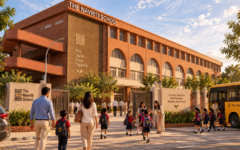
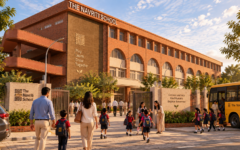
This evidence-based approach contrasts sharply with traditional school design, which often prioritizes administrative convenience, cost efficiency, or conventional wisdom. A scientist-designed school, like Navriti, for instance, approaches education with the same rigor one would apply to a scientific experiment, constantly asking: “What does the data tell us about optimal learning conditions for young minds?” This leads to a truly unique and effective learning environment, fostering curious and confident children who are prepared for the world beyond exams. For parents seeking future-ready schools in Gurgaon, understanding this distinction is crucial.
How Do Scientists Design Schools Differently Than Architects?
Scientists and architects approach school design from fundamentally different perspectives. Architects primarily focus on the physical structure, safety, aesthetics, and functionality of the building, ensuring spaces meet regulatory requirements and provide a conducive physical environment. In contrast, scientists design the experience of learning itself, focusing on pedagogical principles, brain development, social-emotional needs, and cognitive processes.
Consider these distinctions:
- Architects: Focus on spatial relationships, material choices, lighting, ventilation, and structural integrity. Their goal is a physically sound and inspiring building.
- Scientists: Focus on curriculum design, teacher training, student-teacher ratios, assessment methods, emotional safety, the flow of learning activities, and the integration of research-backed learning through discovery methods. Their goal is an optimal learning ecosystem.
While a scientist-designed school will certainly collaborate with architects to ensure the physical space supports the scientific principles, for example, designing classrooms that allow for flexible grouping or access to natural light known to boost concentration, the core ‘design’ comes from understanding the human learner. This blend of emotion with logic ensures a truly nurturing and stimulating environment.
What Is Science-Based School Design?
Science-based school design is an educational framework that systematically applies findings from cognitive science, educational psychology, and neuroscience to every facet of a school’s operation. It’s about leveraging what we know about the developing brain and effective learning strategies to create an educational system that is inherently more effective, engaging, and supportive of holistic child development.
This includes:
- Curriculum Development: Designing curricula that align with cognitive development stages, building skills incrementally, and promoting critical thinking over rote memorization.
- Pedagogical Approaches: Implementing teaching methods such as inquiry-based learning, project-based learning, and personalized instruction that are shown to foster deeper understanding and retention.
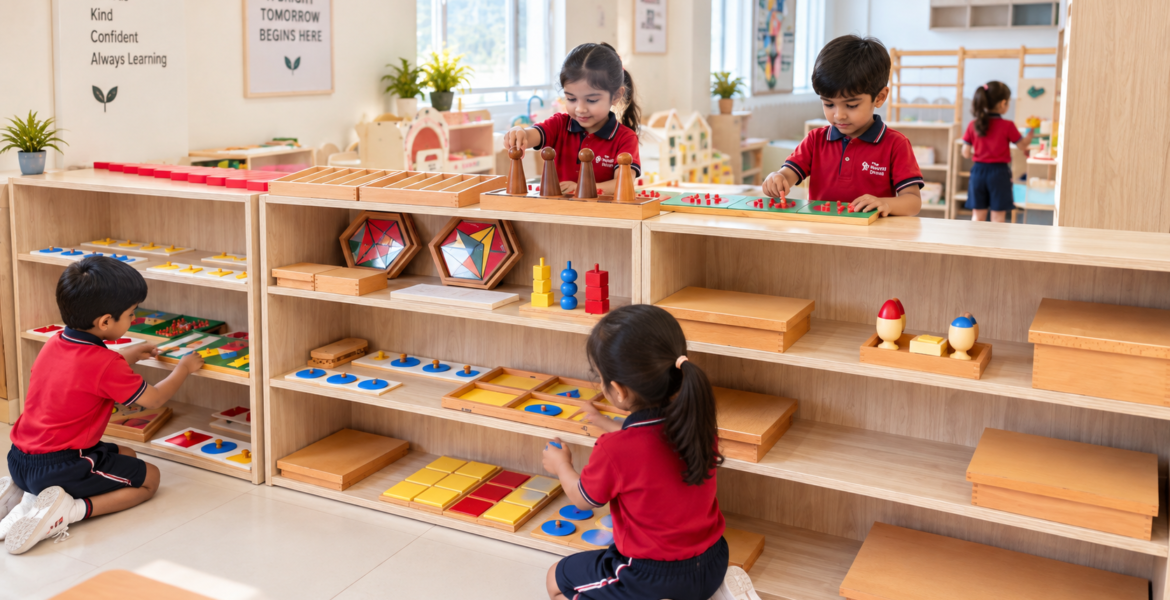
- Learning Environments: Optimizing classroom layouts, acoustics, lighting, and access to outdoor spaces to enhance focus, reduce stress, and encourage collaboration.
- Assessment: Developing assessment tools that genuinely measure understanding, skill application, and growth, rather than just recall of facts.
- Teacher Training: Equipping educators with the latest research on child development, classroom management, and effective instructional strategies.
This comprehensive approach aims to create a learning environment where children are not just taught but are actively engaged in learning through discovery, nurturing young minds to become curious and confident individuals.
Examples of Schools Designed by Scientists
While the concept of a fully “scientist-designed” school is still relatively nascent, many pioneering institutions, like Navriti, are embodying this philosophy. Rather than being a specific model that can be copied, it’s a commitment to an evidence-based approach.
For instance, Navriti School in Gurgaon is a prime example of a learning institution where scientists have reimagined schooling. Here, the emphasis is on a science-based CBSE school model, where experts in child development and cognitive science influence everything from the curriculum’s structure to the daily routines and emotional support systems. Their approach focuses on creating emotionally safe learning environments where children feel secure enough to take risks, ask questions, and explore their interests, which is a cornerstone of effective learning as supported by psychological research.
Other examples might include:
- Specialized Schools: Institutions focusing on specific learning differences, where educational psychologists and neuroscientists design interventions and curricula tailored to particular cognitive profiles.
- Research-Integrated Schools: Schools affiliated with universities or research institutions that serve as living laboratories for educational research, constantly testing and refining methods based on scientific findings.
- Progressive Schools: Many progressive schools, while perhaps not explicitly “designed by scientists,” incorporate principles derived from developmental psychology and learning science, such as experiential learning and student-centered approaches.
These examples highlight a shift towards deliberate, research-informed educational practices aimed at nurturing young minds holistically.
Does a School Designed by Scientists Actually Perform Better?
Yes, a school designed with scientific principles at its core is typically positioned to “perform” better, not just in terms of academic scores, but more importantly, in fostering well-rounded individuals with future-ready skills. This improved performance stems from aligning educational practices with how children naturally learn and grow.
Performance is viewed holistically:
- Deeper Learning: Students in such environments often demonstrate a deeper understanding of concepts, better critical thinking abilities, and improved problem-solving skills, because the curriculum is designed for conceptual mastery, not surface-level memorization.
- Enhanced Engagement: Learning experiences are crafted to be intrinsically motivating, tapping into children’s natural curiosity and leading to increased engagement and a love for learning.
- Greater Well-being: By prioritizing emotionally safe learning environments and understanding developmental stages, these schools contribute to better mental health, reduced stress, and increased confidence in children.
- Future-Ready Skills: The focus on experiential learning, collaboration, and adaptability directly nurtures the skills necessary for success in a rapidly changing world.
While direct comparative studies are complex due to numerous variables, the cumulative evidence from cognitive science consistently points to the benefits of instruction and environments that are thoughtfully designed around human learning processes. For parents in Gurgaon, this is about choosing a school that prioritizes long-term growth over short-term metrics, as discussed in What Gurgaon Parents Prioritise When Choosing Schools in 2026.
What Aspects of School Design Do Scientists Focus On?
When scientists design schools, their focus extends far beyond textbooks and classrooms. They delve into the intricate interplay of cognitive, emotional, social, and physical factors that influence a child’s learning journey.
Key aspects include:
- Cognitive Load Management: Ensuring that information is presented in ways that optimize the brain’s capacity to process and retain it, avoiding overwhelming students.
- Social-Emotional Learning (SEL): Integrating explicit teaching of empathy, self-regulation, conflict resolution, and resilience, recognizing their critical role in academic success and life.
- Motivation and Engagement: Designing curricula and activities that foster intrinsic motivation through challenge, choice, and relevance to real-world problems.
- Feedback Mechanisms: Implementing constructive, timely, and specific feedback that guides learning rather than just evaluating performance.
- Physical Environment: Considering lighting, noise levels, seating arrangements, and access to nature to create calming and stimulating spaces conducive to learning.
- Teacher Development: Focusing on continuous professional development for educators, grounding practices in the latest research on effective teaching strategies.
- Assessment for Learning: Shifting from summative assessments (tests at the end) to formative assessments (ongoing checks for understanding) that inform teaching adjustments.
This comprehensive approach ensures that every element supports the child’s holistic growth, from intellectual curiosity to emotional well-being.
Is There Evidence That Scientist-Designed Schools Improve Learning Outcomes?
Yes, there is substantial evidence from various scientific fields supporting the principles that underpin scientist-designed schools, which collectively lead to improved learning outcomes. While “scientist-designed schools” as a distinct category is emerging, the educational practices they champion are well-researched.
For example:
- Cognitive Psychology: Research on memory, attention, and problem-solving informs curriculum sequencing and instructional methods that enhance retention and critical thinking (Bjork & Bjork, 1992).
- Developmental Psychology: Studies on child development guide age-appropriate curriculum, social-emotional learning programs, and understanding of individual differences (Piaget, 1964; Vygotsky, 1978).
- Neuroscience: Insights into brain plasticity, the impact of stress on learning, and the role of emotions inform the creation of emotionally safe learning environments and stress-reduction techniques (Immordino-Yang & Damasio, 2007).
- Educational Research: Meta-analyses consistently show that strategies like explicit instruction, formative assessment, and collaborative learning significantly impact student achievement (Hattie, 2009).
By integrating these evidence-based strategies, scientist-designed schools aim for not just higher test scores, but also a deeper love for learning, greater adaptability, and stronger confidence, which are ultimate indicators of success in the 21st century. This approach is what truly makes for a best primary school in Gurgaon.
What’s the Difference Between a Scientist-Designed School and a Regular School?
The fundamental difference between a scientist-designed school and a regular, or traditionally-designed, school lies in their underlying philosophy and decision-making processes. A scientist-designed school intentionally builds its entire ecosystem on research-backed principles, while a regular school often operates based on historical precedents, established norms, or administrative convenience, sometimes incorporating innovative practices but without a unifying scientific framework.
Here’s a comparison:
| Feature | Scientist-Designed School | Regular School |
|---|---|---|
| Foundation | Cognitive science, developmental psychology, neuroscience research | Tradition, conventional wisdom, administrative norms |
| Curriculum | Designed for cognitive stages, inquiry-based, real-world relevance | Often subject-driven, rote learning, standardized testing focus |
| Teaching | Personalized, experiential learning, adaptive, continuous feedback | Uniform, teacher-centered, lectures, less individualized support |
| Environment | Optimised for emotional safety, flexibility, sensory input | Standardized classrooms, functional but less scientifically informed |
| Assessment | Formative, growth-focused, authentic tasks | Summative, memory-based, high-stakes exams |
| Goal | Holistic child development, future-ready skills, lifelong learning | Academic achievement, exam success, traditional career paths |
Choosing a scientist-designed school means embracing a model that proactively shapes learning around the child’s natural abilities and potential, fostering curiosity-led learning at every turn. It reflects a commitment to education beyond exams.
What Qualifications Do Scientists Need to Design Schools?
Designing a school from a scientific perspective requires a multidisciplinary team with specific expertise rather than a single individual. The qualifications needed typically span several scientific fields related to human learning and development.
Essential qualifications and areas of expertise include:
- Cognitive Scientists: Expertise in how the brain processes information, memory formation, attention, and problem-solving. This includes PhDs in cognitive psychology, educational psychology, or neuroscience.
- Developmental Psychologists: Deep understanding of child and adolescent development across different age groups, including social, emotional, and intellectual milestones.
- Educational Researchers/Pedagogical Experts: Knowledge of effective teaching methodologies, curriculum design, assessment strategies, and educational technology, often with a background in educational theory and practice.
- Behavioral Scientists: Expertise in motivation, behavior management, and creating positive learning climates.
This collaborative approach ensures that the school’s design integrates a comprehensive understanding of the child, intellectually, emotionally, and socially, to create a truly impactful learning environment. It’s about more than just academic qualifications; it’s about a genuine passion for understanding and nurturing young minds.
Can Any Scientist Design a School, or Does It Require Specific Expertise?
No, not just “any scientist” can design a school. It requires specific expertise at the intersection of various scientific disciplines related to human learning, development, and behavior. A physicist, for example, while brilliant in their field, may not possess the specialized knowledge in child psychology or educational neuroscience necessary to design an optimal learning environment.
The key is to have scientists who:
- Specialize in Learning Sciences: This includes cognitive scientists, developmental psychologists, educational psychologists, and neuroscientists whose research directly applies to how humans learn and develop.
- Possess Practical Educational Understanding: Beyond theoretical knowledge, they need an understanding of classroom dynamics, curriculum implementation, and the practical realities of school operations.
- Are Interdisciplinary: Effective school design draws from multiple fields, requiring scientists who can integrate diverse insights into a cohesive educational framework.
This specialized, interdisciplinary expertise ensures that the school’s design is not just scientifically sound but also practical, effective, and truly beneficial for the children it serves, building a foundation for confidence-building education.
What Mistakes Do Schools Make That Scientists Would Avoid?
Many traditional schools inadvertently make common mistakes that a science-informed approach would actively avoid, primarily because these practices are often rooted in convention rather than evidence.
Some key mistakes include:
- Over-reliance on Rote Learning: Emphasizing memorization over conceptual understanding, which is less effective for long-term retention and critical thinking.
- Ignoring Emotional Well-being: Overlooking the crucial link between emotional safety and cognitive function, leading to stressful learning environments.
- One-Size-Fits-All Teaching: Assuming all children learn at the same pace or in the same way, failing to accommodate diverse learning styles and needs.
- Excessive Homework for Young Children: Assigning tasks that are disproportionate to developmental stages, leading to burnout rather than reinforcement.
- Lack of Experiential Learning: Focusing primarily on textbook knowledge without sufficient hands-on, real-world learning experiences.
- Punitive Discipline Models: Using fear or punishment, which can hinder intrinsic motivation and create negative associations with school, instead of fostering positive behavior through understanding and guidance.
A school designed by scientists prioritizes emotionally safe learning environments, personalized approaches, and experiential learning, knowing these are fundamental to nurturing young minds and ensuring holistic child development.
Is Science-Based School Design Just a Marketing Term?
While “science-based school design” can sometimes be used as a marketing term, its true meaning represents a profound philosophical and practical commitment to evidence-informed education. To discern whether it’s genuine or merely a slogan, parents should look beyond the words and examine the school’s actual practices.
A truly science-based school will demonstrate this commitment through:
- Transparent Methodologies: Clear explanations of how scientific principles inform curriculum, teaching, and environment.
- Qualified Personnel: An advisory board or staff with backgrounds in cognitive science, developmental psychology, or educational research.
- Continuous Evaluation: A system for assessing the effectiveness of their methods and adapting based on outcomes, reflecting a scientific approach to improvement.
- Emphasis on Growth: A focus on a child’s holistic growth and future-ready skills, not just academic metrics.
- Joyful Classrooms: An observable environment where children are engaged, curious, and feel emotionally safe.
If a school, like Navriti, can articulate the research behind its choices and show how these translate into daily learning experiences, then “designed by scientists” is far more than just a marketing claim, it’s a promise of a deeply thoughtful and effective education. Understanding this helps parents make informed decisions during Gurgaon school admissions 2026.
How Do You Know If a School Was Actually Designed by Scientists?
Determining if a school was genuinely designed by scientists requires careful observation and asking the right questions. It’s about looking for tangible evidence of research-informed practices woven into the fabric of the institution.
Here’s what to look for:
- Founding Principles & Advisory Board: Check the school’s mission statement and the bios of its founders or advisory board members. Do they have backgrounds in cognitive science, psychology, education research, or related fields?
- Curriculum Philosophy: Does the curriculum emphasize critical thinking, problem-solving, and experiential learning over rote memorization? Can they explain the scientific basis for their teaching methods?
- Classroom Environment: Observe the classrooms. Are they designed for flexibility, collaboration, and minimal distraction? Do they incorporate natural light and calming elements?
- Teacher Training & Pedagogy: Ask about teacher professional development. Is it ongoing and focused on evidence-based instructional strategies? Do teachers use varied methods to cater to different learning styles?
- Assessment Methods: Beyond traditional exams, does the school use formative assessments, portfolios, and projects to gauge understanding and growth?
- Emphasis on Social-Emotional Learning: Is there an explicit program or integrated approach to developing emotional intelligence, resilience, and social skills?
- Openness to Inquiry: A truly science-designed school will welcome questions about their methods and be able to articulate the research behind them. They should be confident without sounding promotional.
By exploring these aspects, parents can gain a clear understanding of whether a school truly embodies the principles of being designed by scientists, offering a unique opportunity for their child’s confidence-building education.
Conclusion
The concept of a school ‘designed by scientists’ is an exciting evolution in education, signaling a shift from conventional practices to a deeply evidence-informed approach. It means that every aspect of a child’s learning journey, from the curriculum to the classroom environment and teaching methods, is meticulously crafted based on robust research in cognitive science, developmental psychology, and neuroscience. This commitment ensures an education that is not just academically rigorous, but also deeply nurturing, fostering curiosity, building confidence, and preparing children with future-ready skills for a rapidly changing world.
For parents seeking an educational environment that truly understands how children learn and grow, actively seeking out schools committed to this science-based design, like Navriti, can make a profound difference. It’s about investing in an approach that champions holistic child development, experiential learning, and emotionally safe learning environments, ultimately leading to joyful classrooms and empowered young minds ready to thrive.
FAQ
Q: What is the main goal of a scientist-designed school?
A: The main goal is to optimize a child’s learning and holistic development by applying research-backed principles from cognitive science, developmental psychology, and neuroscience to all aspects of schooling.
Q: Is “designed by scientists” the same as a STEM school?
A: No, while a scientist-designed school will value scientific inquiry, it’s not exclusively a STEM school. It uses scientific principles to design the entire educational experience, including humanities and arts, not just focusing on STEM subjects.
Q: How does a scientist-designed school approach emotional development?
A: Scientist-designed schools prioritize emotional well-being by creating emotionally safe learning environments, integrating social-emotional learning (SEL) into the curriculum, and training teachers to understand and support children’s emotional needs, based on psychological research.
Q: Are scientist-designed schools only for gifted children?
A: No, the principles of scientist-designed schools are universal, aiming to benefit all children by aligning education with how the human brain learns best. They often incorporate personalized learning to cater to a range of abilities and learning styles.
Q: Will a scientist-designed school ignore traditional academic subjects?
A: Absolutely not. A scientist-designed school will teach traditional academic subjects but will do so using methods proven to be more effective for deeper understanding, retention, and application, rather than through rote memorization.
Q: Does it cost more to attend a scientist-designed school?
A: The cost can vary, but the investment often reflects the specialized expertise, continuous research integration, and tailored learning environments involved. It’s an investment in a more effective and future-focused educational experience for your child.
Q: How can parents verify a school’s claim of being “scientist-designed”?
A: Parents should look for transparent methodologies, an advisory board with relevant scientific credentials, evidence of continuous research integration, and observable practices in curriculum, teaching, and classroom environment that align with scientific principles.
Q: What role does play have in a scientist-designed early years program?
A: In early years, play is central to a scientist-designed program. Research shows that play is crucial for cognitive, social, emotional, and physical development, fostering creativity, problem-solving, and curiosity in an age-appropriate manner.
Q: Is “scientist-designed” a new concept in education?
A: While the explicit marketing term might be newer, the underlying principles of applying scientific research to education have been evolving for decades. What’s new is the comprehensive and intentional integration of these insights across an entire school model.
Q: What kind of teachers work in a scientist-designed school?
A: Teachers in a scientist-designed school are typically highly trained in evidence-based pedagogical practices, understand child development, are adaptable, and committed to continuous learning and reflection. They often act as facilitators of learning through discovery.
Related Reading
- Scientists Reimagining Schooling at Navriti School | Gurugram
- What Future-Ready Means for 7-Year-Olds: Navriti’s Approach
- Gurgaon School Admissions 2026: What Parents Should Look Beyond Academics – Navriti
- Science-Based CBSE School | Career-Ready School in Gurgaon
- What Makes the Best School in Gurgaon? Beyond Exam Results