Why Early Years Education Sets the Foundation for Everything That Follows
May 7, 2026 2026-08-20 8:08Why Early Years Education Sets the Foundation for Everything That Follows
Why Early Years Education Sets the Foundation for Everything That Follows
Ninety percent of a child’s brain develops before age five. This single statistic reveals why early years education sets the foundation for everything that follows—from academic success to emotional resilience, from social skills to creative thinking. Yet many parents still view these formative years as simply “preparation” for “real” learning.
The truth is far more profound. These early experiences don’t just prepare children for school; they shape the very architecture of their developing minds.
Key Takeaways
• Brain architecture forms rapidly during early years, creating neural pathways that influence lifelong learning capacity
• Emotional and social foundations established in early childhood directly impact future relationships and self-confidence
• Curiosity-led learning in early years develops critical thinking skills essential for navigating an uncertain future
• Quality early education provides measurable returns in academic achievement, career success, and life satisfaction
• Holistic development during these years creates resilient, adaptable learners ready for tomorrow’s challenges
The Science Behind Early Brain Development
The human brain forms over one million neural connections every second during the first few years of life. This remarkable period of brain development and the role of experiences in the early years creates the foundation for all future learning.
Consider how a child learns language. They don’t memorize grammar rules or vocabulary lists. Instead, through rich interactions, storytelling, and meaningful conversations, they naturally absorb complex linguistic patterns. This process mirrors how quality early education works—through experience, exploration, and genuine engagement rather than rote instruction.
The window of opportunity is both remarkable and finite. Neural pathways that aren’t strengthened during these critical years become much harder to develop later. This doesn’t mean children can’t learn new skills as they grow, but the ease and depth of learning established in early years creates lasting advantages.
Why Early Years Education Sets the Foundation for Emotional Intelligence
Beyond cognitive development, early childhood experiences shape emotional resilience and social competence. Children who experience emotionally safe learning environments develop stronger self-regulation skills and deeper empathy for others.
Think about how young children naturally approach challenges. They experiment fearlessly, ask endless questions, and bounce back from setbacks with remarkable resilience. Quality early education nurtures these innate strengths rather than suppressing them through premature academic pressure.
Building Confidence Through Discovery
When children engage in learning through discovery, they develop genuine confidence in their abilities. This isn’t the fragile confidence that comes from external praise, but the deep-rooted self-assurance that emerges from successfully navigating challenges and understanding their own capabilities.
Real-world learning experiences during early years teach children that mistakes are valuable learning opportunities, not failures to avoid. This mindset becomes the foundation for lifelong resilience and growth.
The Long-Term Impact: Why Early Years Education Sets the Foundation for Academic Success
Research consistently shows that children who receive quality early education demonstrate:
- Stronger reading and mathematics skills throughout elementary school
- Better problem-solving abilities in complex academic situations
- Higher graduation rates from high school and college
- Greater career satisfaction and earning potential in adulthood
But these outcomes aren’t the result of early academic drilling or premature formal instruction. Instead, they emerge from rich, developmentally appropriate experiences that honor how young children naturally learn.
Why early years education looks different in next-gen schools reflects this understanding. Rather than pushing down traditional academic content, forward-thinking educators create environments where children develop the thinking skills, creativity, and collaboration abilities they’ll need for future success.
Physical Development: The Body-Mind Connection
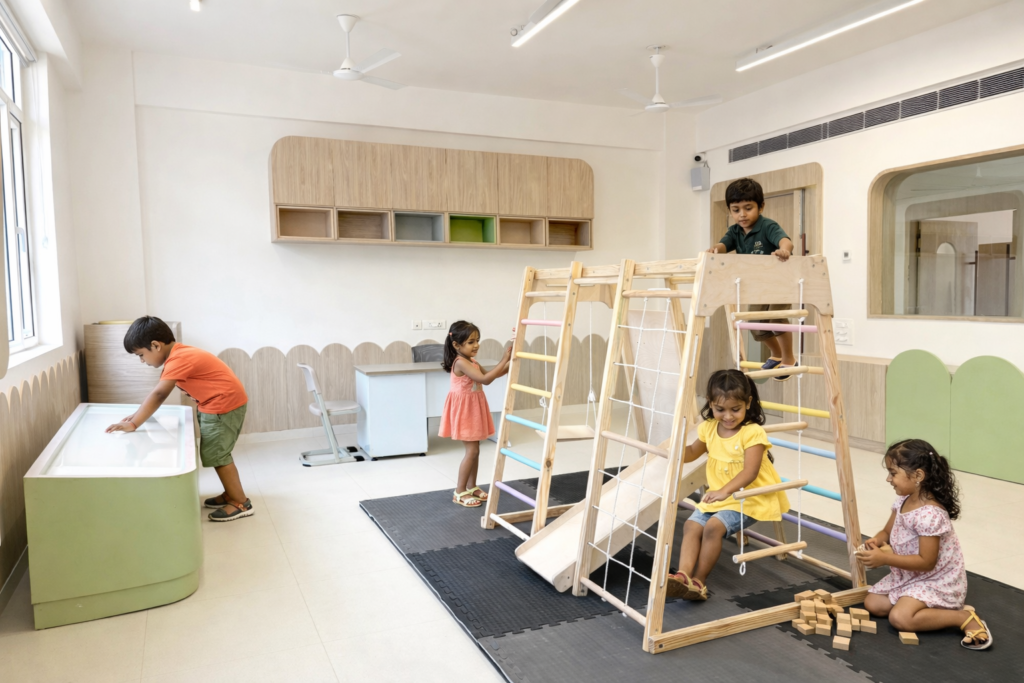
The relationship between physical development and cognitive growth during early years is profound. When children engage in active play, manipulate materials, and explore their environment through movement, they’re building neural connections that support all areas of learning.
The importance of exercise during the early childhood years extends far beyond physical health. Movement experiences enhance spatial reasoning, executive function, and even language development.
Hands-on learning isn’t just engaging—it’s essential for optimal brain development. Children who spend these crucial years in environments rich with sensory experiences and physical exploration develop stronger foundations for abstract thinking and academic learning.
Creating Future-Ready Learners
Why early years education sets the foundation for everything that follows becomes clear when we consider the rapidly changing world children will inherit. The jobs they’ll pursue, the challenges they’ll face, and the solutions they’ll need to create don’t yet exist.
What remains constant is the need for:
- Creative problem-solving abilities
- Emotional resilience in the face of uncertainty
- Collaborative skills for complex teamwork
- Adaptability to navigate constant change
- Curiosity to drive lifelong learning
These capabilities aren’t developed through worksheets or standardized curricula. They emerge through rich, meaningful experiences that honor children’s natural ways of learning and growing.
The Role of Science-Informed Teaching
Modern understanding of child development, informed by neuroscience in education approaches, reveals how to optimize these foundational years. When educators understand how children’s brains develop, they can create experiences that align with natural learning processes rather than working against them.
This doesn’t mean abandoning structure or academic goals. Instead, it means achieving these goals through developmentally appropriate methods that strengthen rather than stress developing minds.
Nurturing the Whole Child
Quality early education recognizes that children aren’t just future students—they’re complete human beings with rich inner lives, unique perspectives, and valuable contributions to make right now. Holistic child development approaches honor this reality.
When we understand why early years education sets the foundation for everything that follows, we see that these years aren’t about preparation—they’re about cultivation. We’re not filling empty vessels with knowledge; we’re nurturing the growth of capable, confident, caring human beings.
The investment in quality early education pays dividends not just in test scores or college admissions, but in the development of individuals who can think critically, relate compassionately, and contribute meaningfully to their communities.
Conclusion
The evidence is clear: why early years education sets the foundation for everything that follows isn’t just educational theory—it’s biological reality. The rapid brain development, emotional growth, and skill acquisition that occur during these precious years create the architecture for lifelong learning and success.
For thoughtful parents considering their child’s educational journey, the question isn’t whether early years matter, but how to find environments that honor the profound importance of this developmental period. Look for programs that prioritize curiosity over compliance, understanding over memorization, and joy over pressure.
Take action today by visiting schools that demonstrate science-informed approaches to early childhood education. Ask how they support brain development, nurture emotional intelligence, and create the foundation for future-ready learning. Your child’s tomorrow begins with the choices you make for their early years today.